
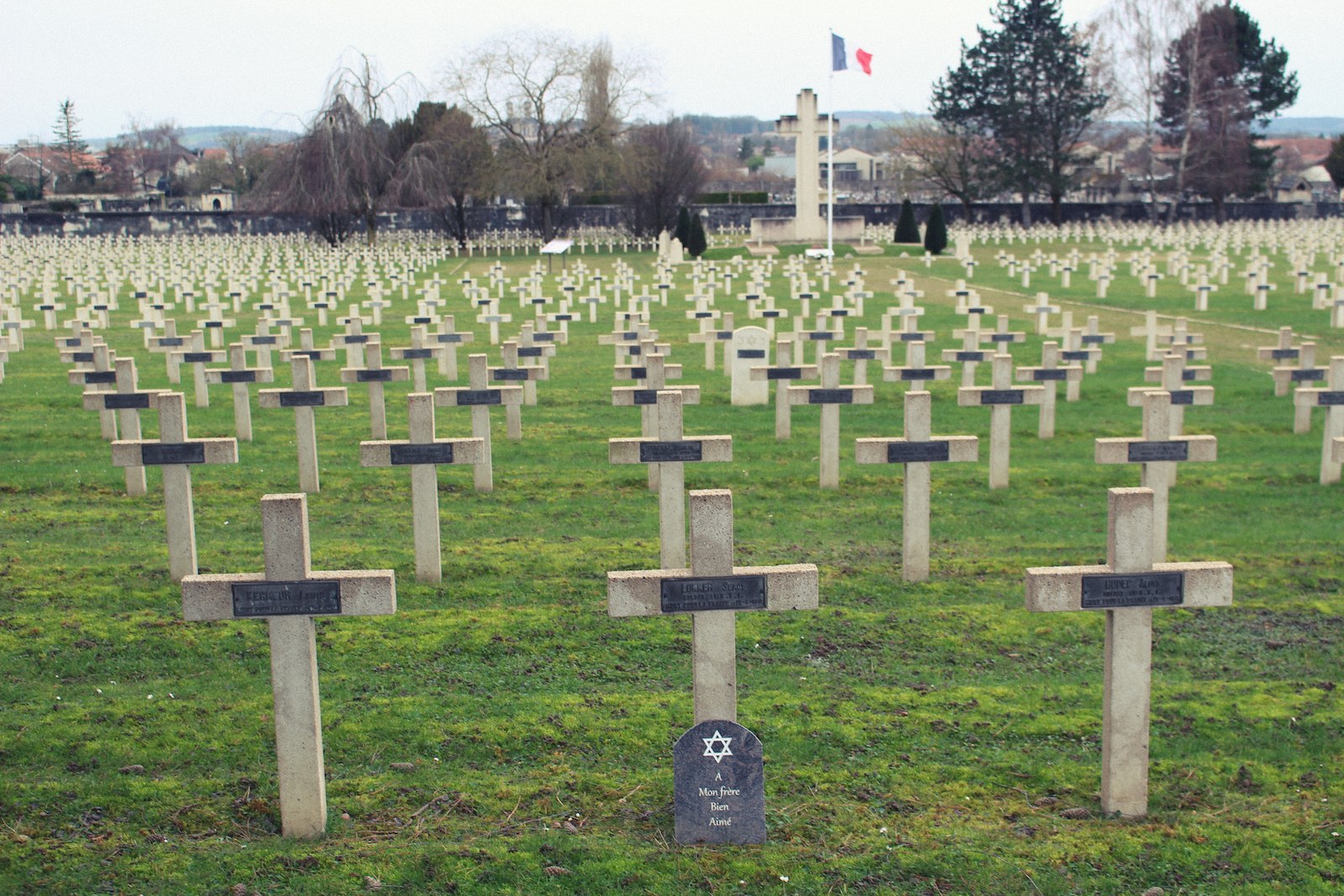
Verdun is a very special place for me, but not for the reasons you might think.
Sure, there are countless things to do in Verdun related to World War I. After all, the bloody Battle of Verdun took place here in 1916.
However, this city in the historic region of Lorraine is also where Gui spent all of his childhood and adolescence. Being able to visit it together was an emotional experience for both of us.
Against this rather grim backdrop, he showed me his childhood homes and his old schools, and we were even able to have a quiche lorraine at his favourite café, which has been in operation for decades.
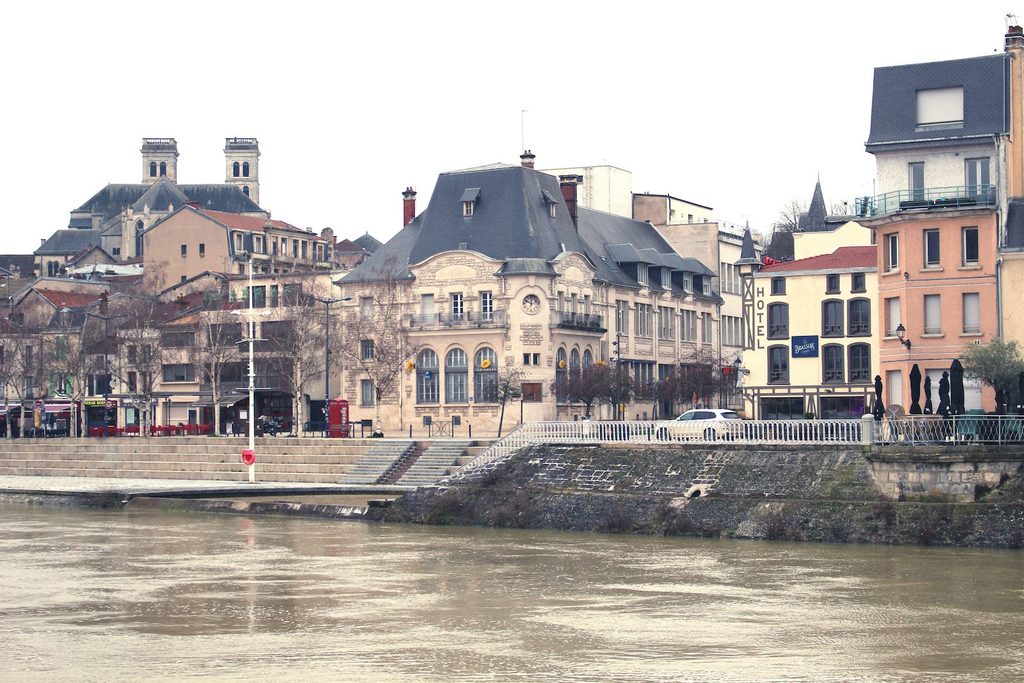
For me, it was fascinating to see how Gui’s life and the lives of other locals have been interwoven into this often sad and sobering landscape.
On a walk across the mournful Verdun battlefields, where entire villages had been razed to the ground, Gui pointed out pathways along which he would cycle with his family in the spring and summer.
Gui would also walk down the stairs of the famous Monument à la Victoire et aux Soldats de Verdun (Monument to the Victory and Soldiers of Verdun) every day after school so his parents could pick him up on the street below.
According to Gui, the Verdun of today, which is now in the administrative department of Meuse in the Grand Est region, has barely changed, except for the fact that its population is gradually shrinking.
Okay, enough waxing lyrical. Together with Gui, I’ve compiled a list of what to do in Verdun that I would consider fairly comprehensive. Let’s get into it!
Table of Contents (click to view)
- Where to stay in Verdun
- Is Verdun worth visiting?
- 26 things to do in Verdun
- 1. Champ de bataille de Verdun (Verdun Battlefield)
- 2. Monument à la Victoire et aux Soldats de Verdun (Monument to the Victory and Soldiers of Verdun)
- 3. Cathédrale Notre-Dame de Verdun (Verdun Cathedral)
- 4. Porte Chaussée (Chaussée Gate)
- 5. Citadelle souterraine de Verdun (Underground Citadel of Verdun)
- 6. Centre Mondial de la Paix, des Libertés et des Droits de l’Homme (World Centre for Peace, Freedoms and Human Rights)
- 7. Porte Châtel (Châtel Gate)
- 8. Musée de la Princerie (Princerie Museum)
- 9. Carrefour des Maréchaux (Crossroad of the Marshals)
- 10. Escalier des gros degrés (Stairway with Big Steps)
- 11. Banks of the Meuse
- 12. Monument aux Enfants de Verdun morts pour la France (Monument to the Children of Verdun Who Died for France)
- 13. Musée du Poste de Garde (Museum of the Guardhouse)
- 14. Pont-écluse Saint-Amand (Saint Amand Lock Bridge)
- 15. Porte Saint-Paul (Saint Paul Gate)
- 16. Maison du Pape Jules II (House of Pope Julius II)
- 17. Boutique Dragées Braquier (Braquier Dragée Boutique)
- 18. Fabrique de Dragées Braquier (Braquier Dragée Factory)
- 19. Porte Neuve (New Gate)
- 20. Chapelle Saint-Nicolas (Saint Nicolas Chapel)
- 21. Tour des Plaids (Tower of the Plaids) / Tour du Puty (Tower of the Puty)
- 22. Tour de l’Islot (Tower of the Islot) / Tour des Minimes (Minimes Tower)
- 23. Parc Japiot (Japiot Park)
- 24. Marché couvert (Covered market)
- 25. La Défense de Rodin (The Defence by Rodin) / L’Appel aux armes de Rodin (The Call to Arms by Rodin)
- 26. Monument aux femmes du monde rural (Monument to the Women of the Rural World)
- Where to eat in Verdun – my recommendations
- Day trips from Verdun
Where to stay in Verdun
- Beautiful hotel in a highly central location – Les Jardins du Mess is located in one of the most recognisable riverside buildings in Verdun’s city centre, with spacious rooms.
- Chic riverside hotel – Savy Hôtel is one of Verdun’s most stylish hotels and enjoys a scenic location on the Meuse River.
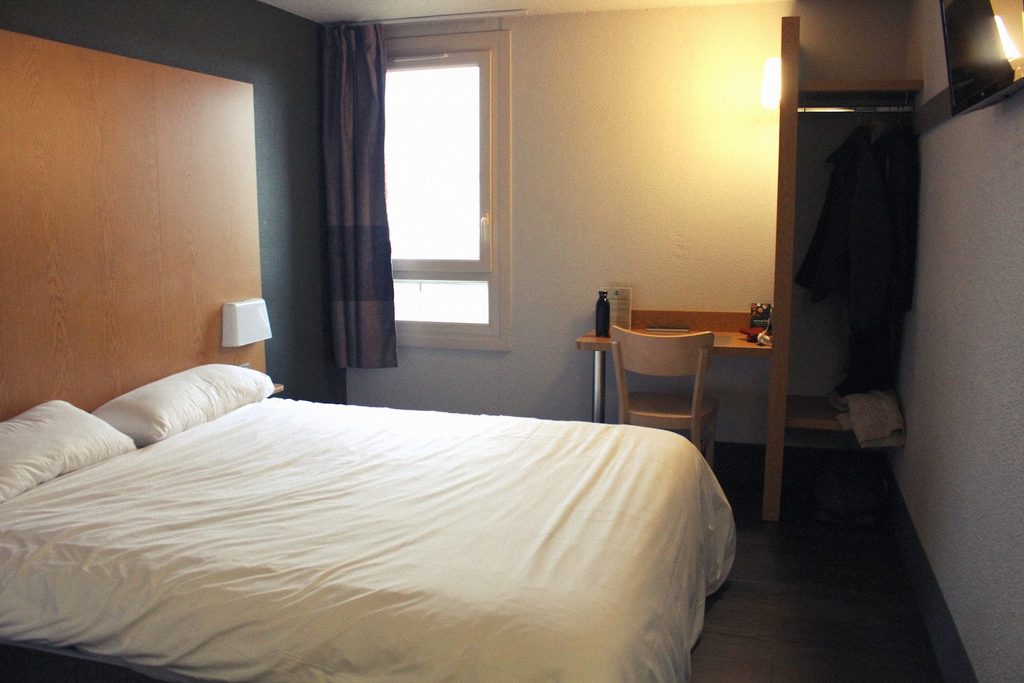
- Affordable budget hotel – B&B Hotel Verdun Sud is one of the cheapest hotels in Verdun, yet still within a 20-minute walk of the city centre. Gui and I stayed here and were more than satisfied with the rooms and service.
Is Verdun worth visiting?
- Major World War I sites – As the site of the Battle of Verdun, one of the longest in World War I, Verdun is a living museum and memorial site.
- Introduction to Lorraine culture – Verdun is a major city in the historic region of Lorraine, which today is officially part of the Grand Est region in eastern France. You can sample hearty local cuisine and traditional sweets here at affordable prices.
- Small, charming city – With the Meuse River, the Canal du Puty (Puty Canal) and the Sainte-Vanne Canal flowing through it, Verdun is home to many scenic riverside areas and is a very pleasant city to explore.
26 things to do in Verdun
Gui and I have compiled this list of things to do in Verdun together. There’s a lot to cover, and some of the Verdun tourist attractions are easier to explore if you have a car or rent a bicycle. So feel free to tailor your itinerary based on your interests and transportation options.
1. Champ de bataille de Verdun (Verdun Battlefield)
The 302-day Battle of Verdun was fought from 21 February to 18 December 1916, making it the longest battle in World War I. Today, the battlefields to the northeast of Verdun’s city centre are one of the key reasons tourists come here.
I’ve written a separate itinerary that will take you through the key sites on the Verdun Battlefields, so don’t forget to check it out.
The battlefields are actually a vast site containing the remains of villages razed during the war, trenches, museums, memorials, forts and cemeteries.
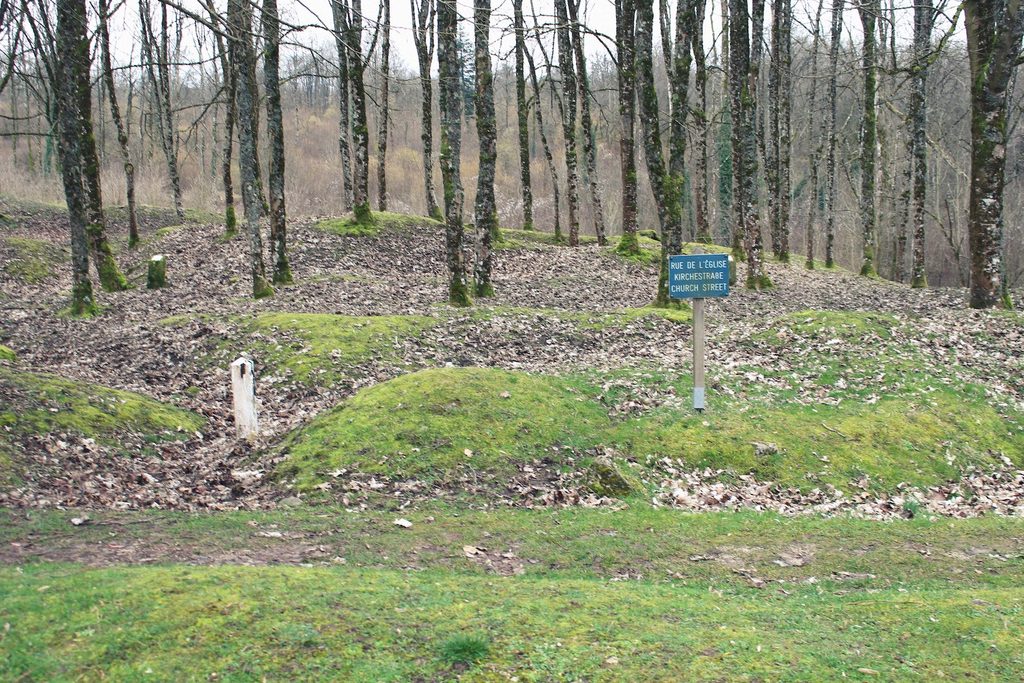
In the above picture, for example, are the remains of Fleury-devant-Douaumont, a village that was completely obliterated. Plaques indicate the location of destroyed landmarks.
The champ de bataille de Verdun (Verdun Battlefield) can be reached by car in about 15 minutes from the city centre. Although exploring them on foot is possible, I wouldn’t recommend it as it would take about 1.5 hours just to reach them from the city centre.
So, how do you visit the Verdun Battlefield without a car? The most fuss-free option for French speakers is to take a guided tour. The tourist office runs four-hour guided tours that can be booked online, with commentary in French.
In my opinion, the best way to visit the Verdun Battlefields without a car is to rent an electric bicycle through the tourist office. This will enable you to choose the sites you want to visit and explore at your own pace.
2. Monument à la Victoire et aux Soldats de Verdun (Monument to the Victory and Soldiers of Verdun)
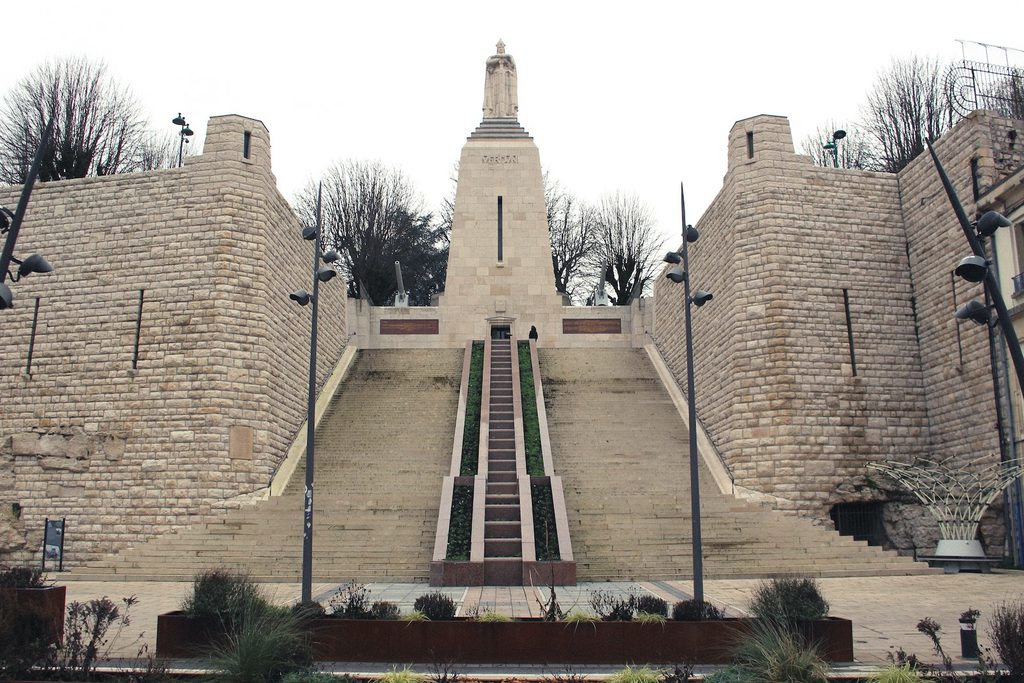
This imposing memorial looms over the city centre and has a staircase of 73 steps. Inaugurated in 1929, it is one of the city’s most recognisable landmarks. It also offers lovely views over the city, so don’t forget to climb to the top.
At the summit, you’ll find a crypt containing a list of the soldiers who received the Verdun Medal. On 1 November each year, the eternal flame from the Tomb of the Unknown Soldier beneath the Arc de Triomphe in Paris is brought to this crypt. On 11 November, the date of the Armistice in World War I, the flame is taken back to Paris.
3. Cathédrale Notre-Dame de Verdun (Verdun Cathedral)
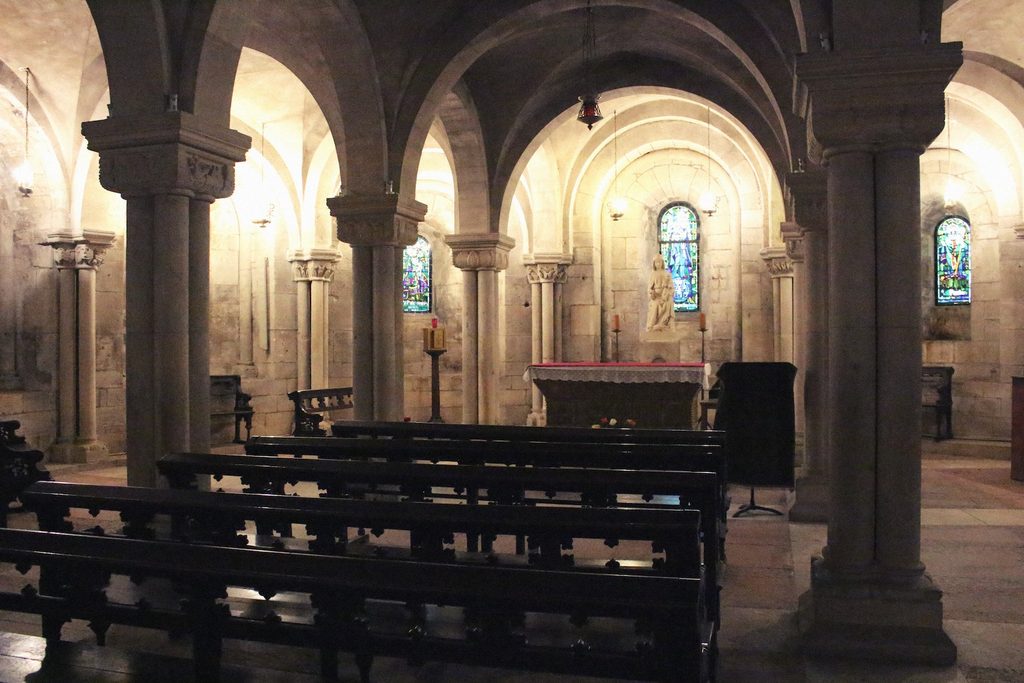
The Cathédrale Notre-Dame de Verdun (Verdun Cathedral) is the oldest cathedral in the historic region of Lorraine and dates back to the third century.
The cathedral has been destroyed and damaged multiple times over the centuries, so the edifice has also been rebuilt and restored repeatedly. The present-day building dates back to about 990 AD and has Gothic, Romanesque and Neo-Classical elements.
During World War I, the cathedral was used by the French army as a garrison and lookout. As a result, it was attacked by German forces. Not-so-fun fact: the first shot that started the Battle of Verdun hit the cathedral head-on. With only the bell towers remaining by the end of the war, most of the present building is a postwar reconstruction.
Although the façade of the cathedral is rather simple, the interior is home to a magnificent crypt (pictured) that has existed since medieval times.
4. Porte Chaussée (Chaussée Gate)
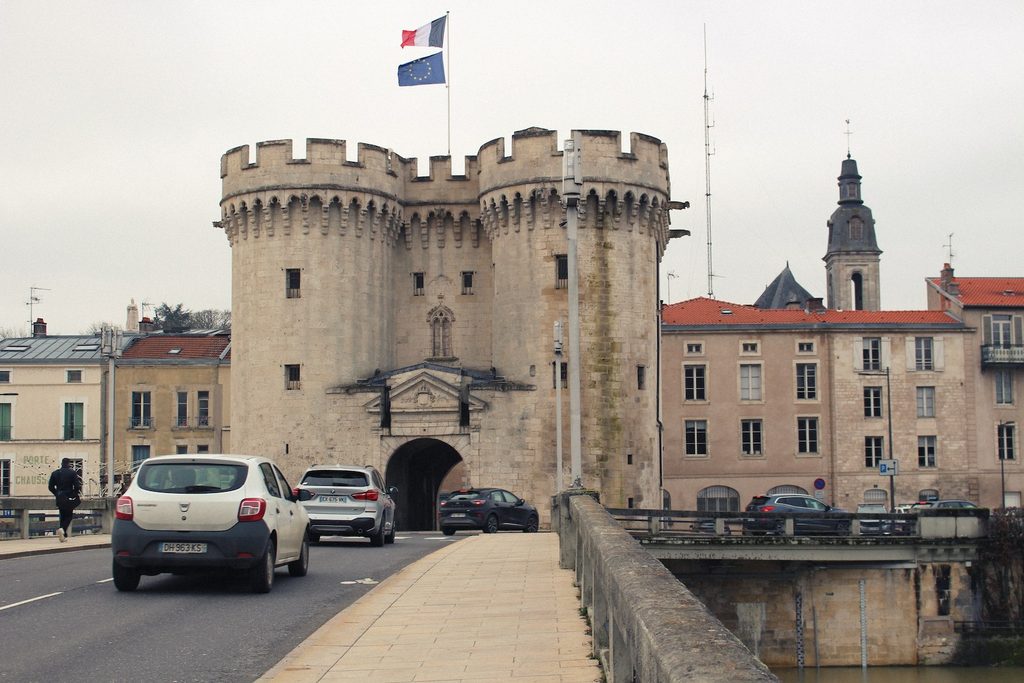
This fairytale-like structure was built in 1380 and was one of three gates that formed part of Verdun’s city walls, offering entry to the fortified medieval city.
In 1690, famous military engineer Vauban modified the doorway, turning it into a rounded arch. The tower was later used as a military prison in the 18th and 19th centuries. Today, it is the most distinctive entryway into the city centre.
5. Citadelle souterraine de Verdun (Underground Citadel of Verdun)
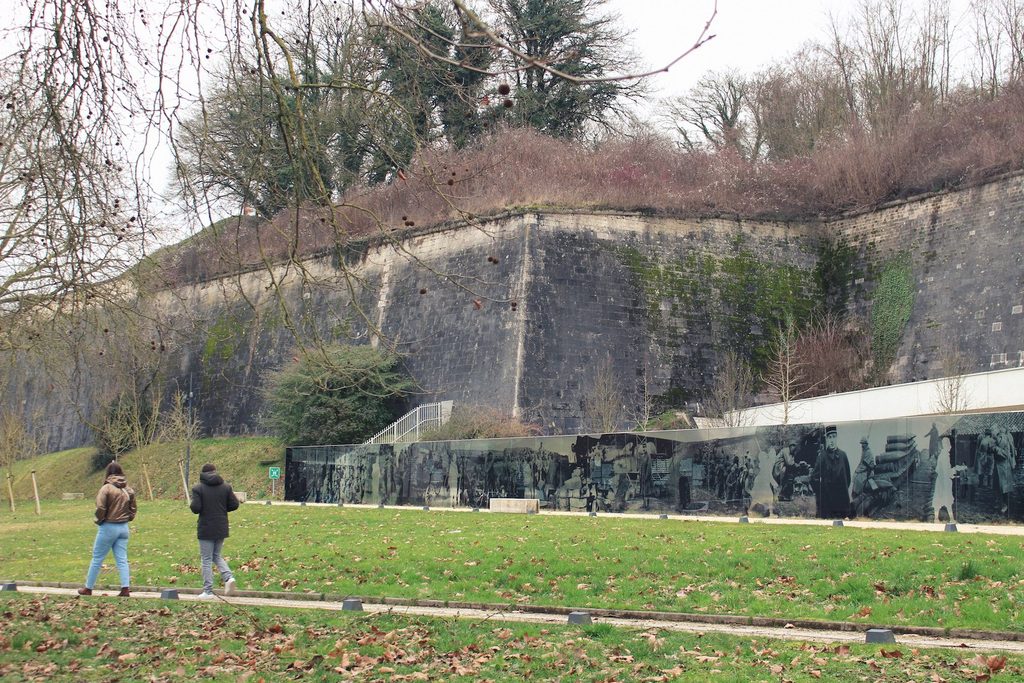
This well-known Verdun tourist attraction takes you on a visit to an underground citadel. It consists of a web of tunnels created in the late 19th century and was occupied by soldiers who lived and worked underground. It was equipped not only with workshops and ammunition stores but also with facilities necessary for everyday life such as kitchens and bakeries.
The citadel is also famous for being where the ceremony for the unknown soldier was held. On 10 November 1920, the coffins of eight soldiers were placed in the citadel, and one was selected to become the French Unknown Soldier who is now buried under the Arc de Triomphe in Paris.
The visit not only lets you discover the citadel, but also creates an immersive experience using virtual reality headsets. The VR headsets are a relatively new addition that you’ll either love or hate. Budget about 1.5 hours for the whole experience.
6. Centre Mondial de la Paix, des Libertés et des Droits de l’Homme (World Centre for Peace, Freedoms and Human Rights)
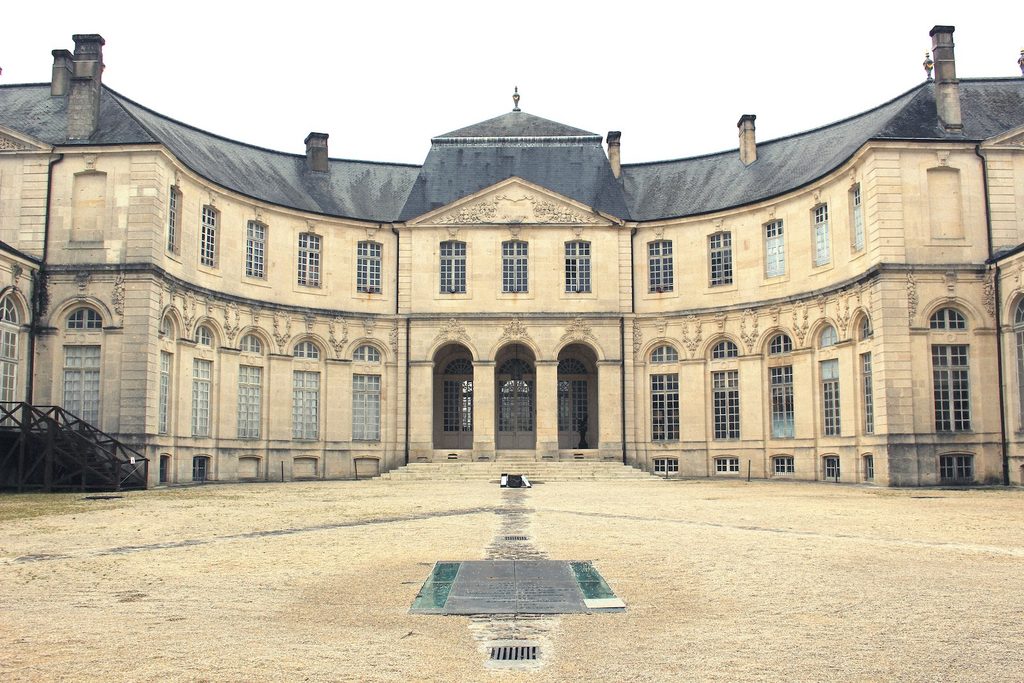
This centre was opened in 1994 to offer a different, more hopeful perspective on the war and destruction with which Verdun has become associated.
Located in an 18th-century former episcopal palace that served as the residence of the bishops, it contains exhibits that illustrate situations in which humans have managed to find peace and reconciliation. You’ll see a fragment of the Berlin Wall as well as a bell symbolising reconciliation between France and Germany.
7. Porte Châtel (Châtel Gate)
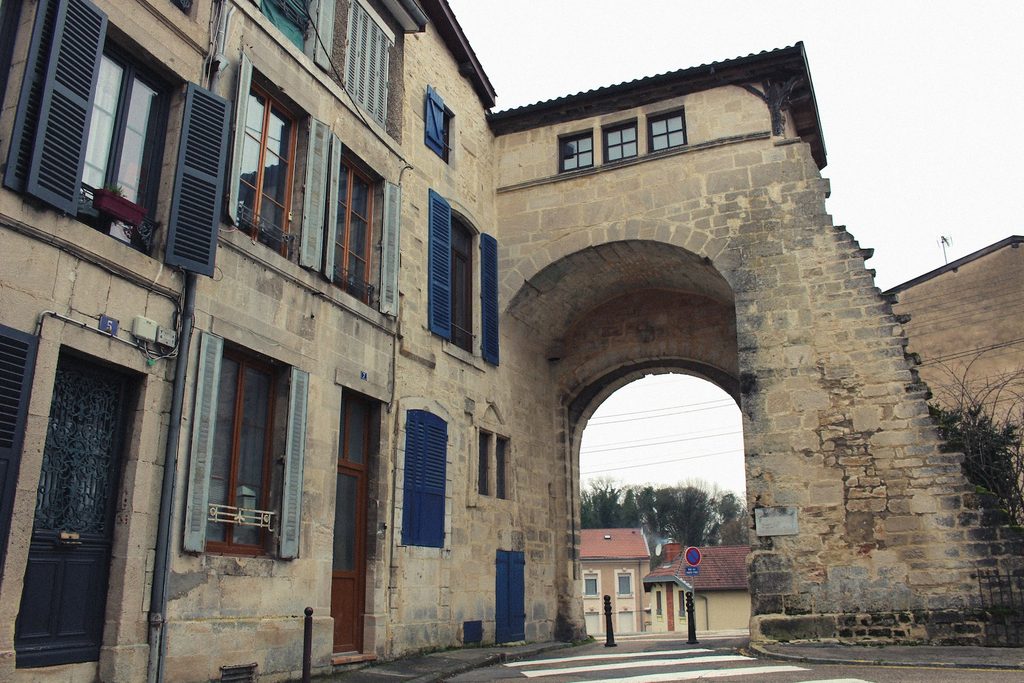
This dramatic-looking gate, formerly known as the Porte Champenoise (Champenoise Gate), was part of the medieval fortified walls surrounding Verdun and controlled access to the city from the north.
While the first mention of the gate dates back to the 12th century, the current structure is believed to have been built in the 13th century. It is joined to a house that was also built into the city walls during the medieval period.
Also look out for the château d’eau (water tower) located just across the road. It was built in 1924 in an imitation-medieval style to match the Porte Châtel (Châtel Gate) and ramparts.
8. Musée de la Princerie (Princerie Museum)
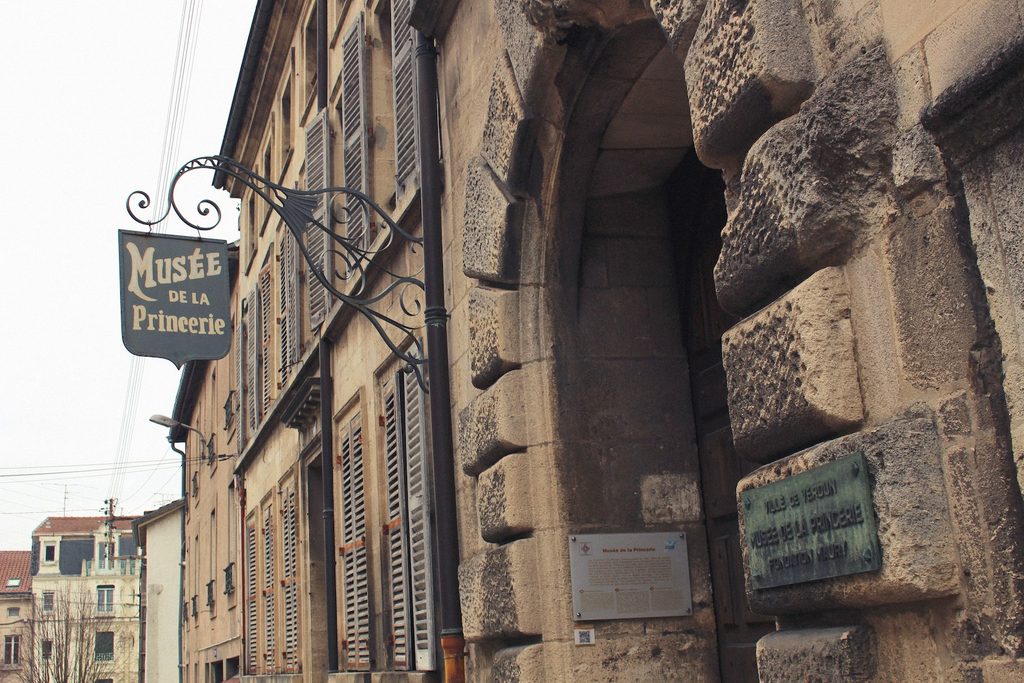
This museum, which is housed in a stately 16th-century mansion, traces the history of Verdun from prehistoric times to just before World War I. Its collection consists of a mix of archaeological artefacts, paintings, sculptures, antiques, ceramics and more. The building is an attraction in itself, with an elegant courtyard, private chapel and beautiful garden.
9. Carrefour des Maréchaux (Crossroad of the Marshals)
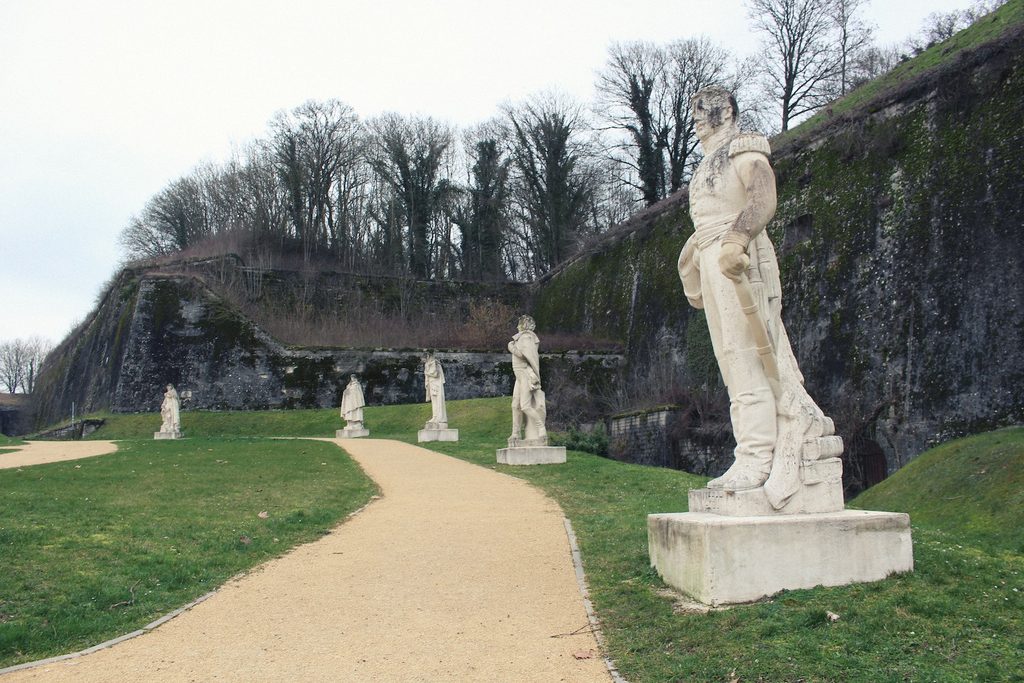
This open-air attraction consists of 16 sculptures portraying French generals and marshals from the First and Second French Empires and World War I, arranged in an evocative formation at the foot of ancient city walls.
Originally commissioned to be displayed on the façade of the Louvre in Paris, they turned out to be too big and ended up getting transferred to Verdun.
10. Escalier des gros degrés (Stairway with Big Steps)
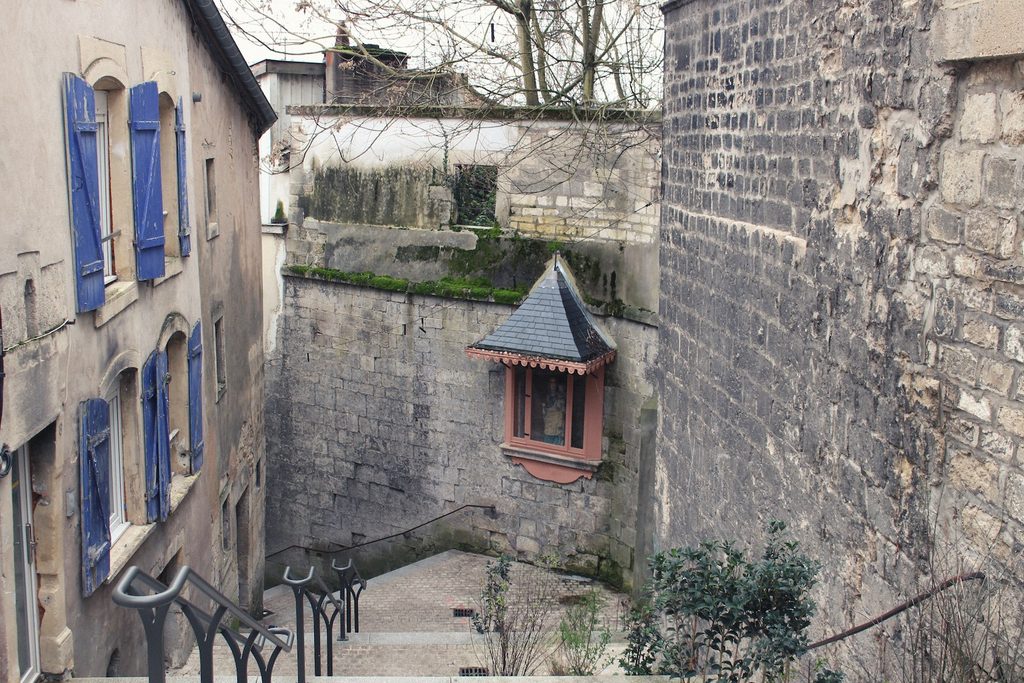
This atmospheric medieval staircase links the upper and lower parts of the city. Originally carved directly into rock, the stairs served as an interface between the upper and lower town. The upper town was the seat of the bishop’s power and home to the aristocracy, while the lower town was where much of Verdun’s commercial activity took place.
Look out for the statue of the Virgin Mary in a niche built into the wall on your right as you walk down the stairs. The statue delineated the border between the part of the city under the church’s jurisdiction and the part under the city’s government.
11. Banks of the Meuse
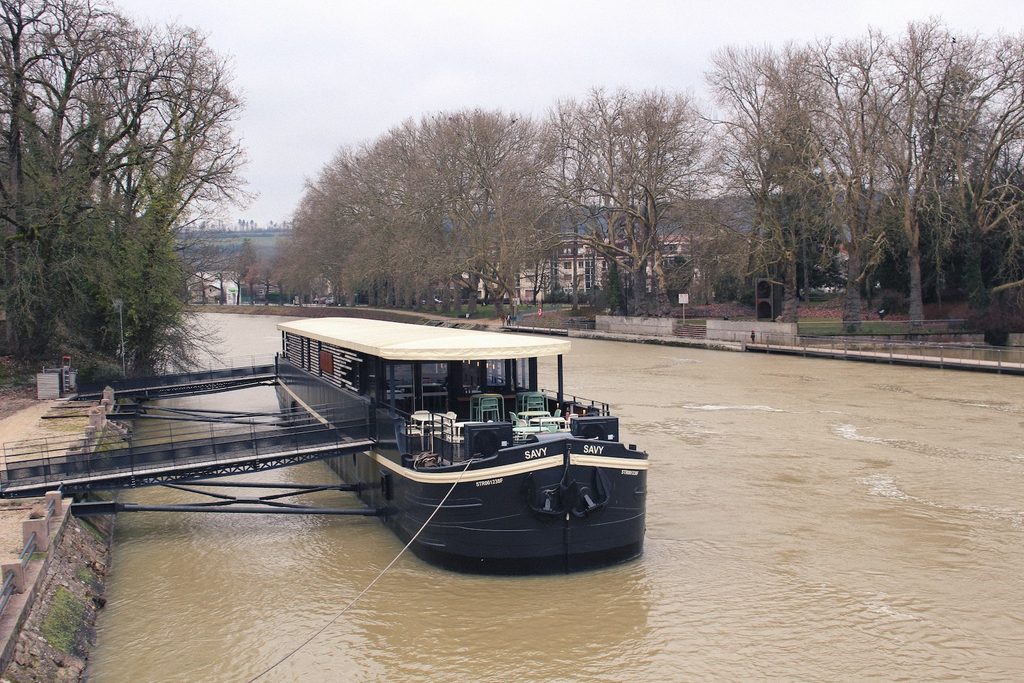
Much of Verdun’s social life takes place on the banks of the Meuse River, with Quai de Londres (London Quay) being a major hangout spot in summer. From Quai de Londres (London Quay), you can follow the Meuse southwest to see traces of Verdun’s medieval fortifications.
12. Monument aux Enfants de Verdun morts pour la France (Monument to the Children of Verdun Who Died for France)
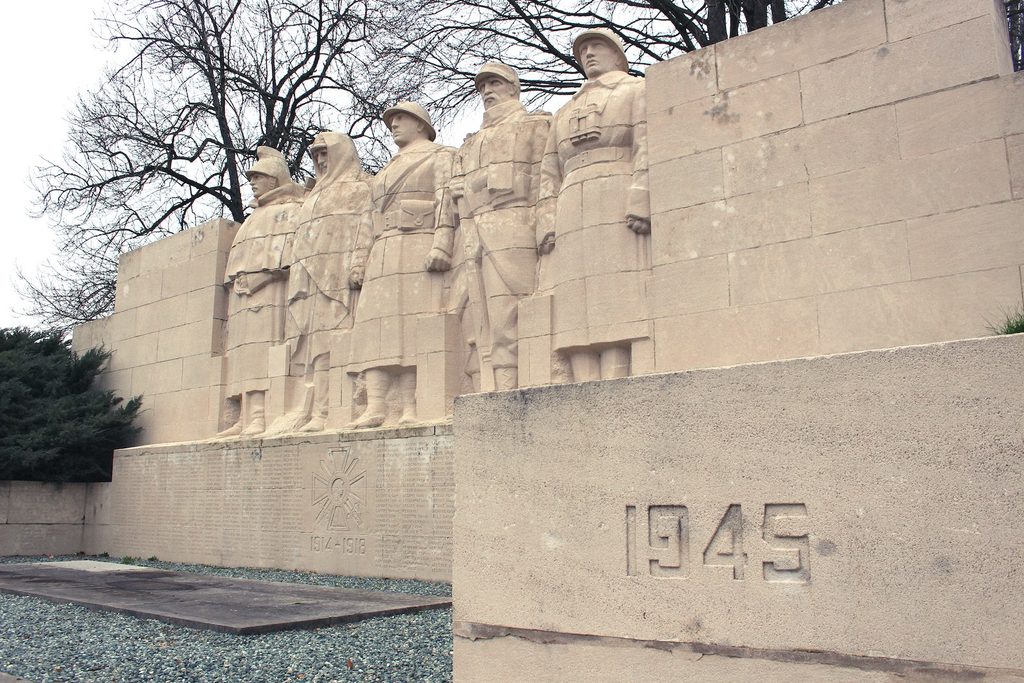
Located on Avenue Général Mangin, this is one of the most visible war memorials in Verdun’s city centre. The depiction of five soldiers standing shoulder-to-shoulder symbolises the motto of the French armed forces during the Battle of Verdun, “On ne passe pas” (They shall not pass). The expressions on the faces of the five soldiers give me the shivers.
13. Musée du Poste de Garde (Museum of the Guardhouse)
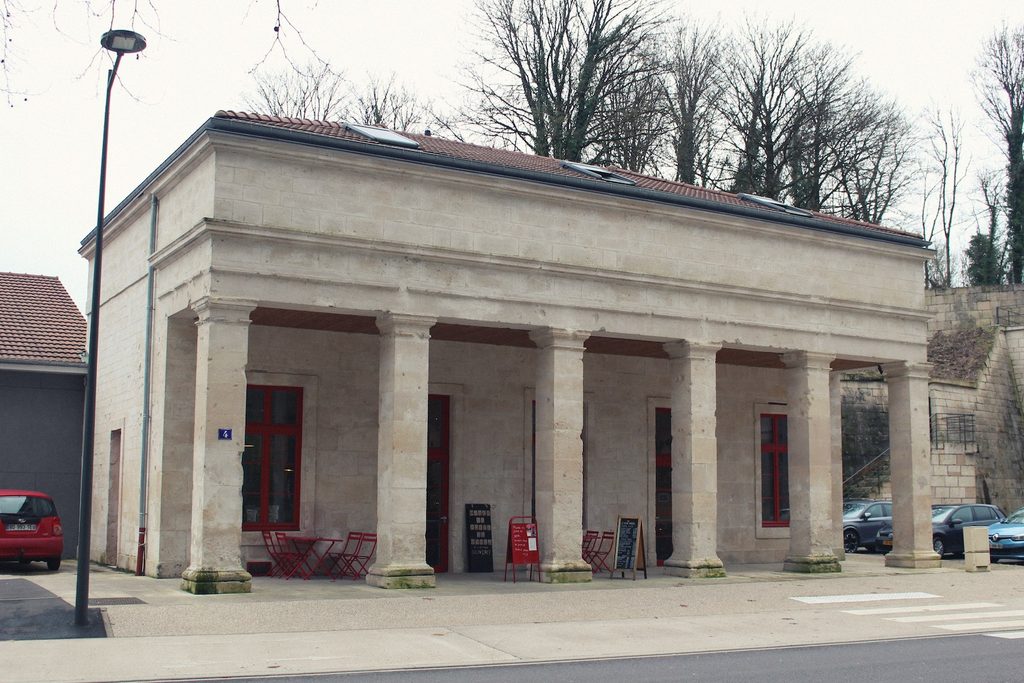
This little museum is housed in a former military guardhouse and is located just across the road from the Citadelle souterraine de Verdun (Underground Citadel of Verdun). It is dedicated to the everyday lives and routines of World War I soldiers and convincingly recreates wartime environments such as trenches and shelters.
14. Pont-écluse Saint-Amand (Saint Amand Lock Bridge)
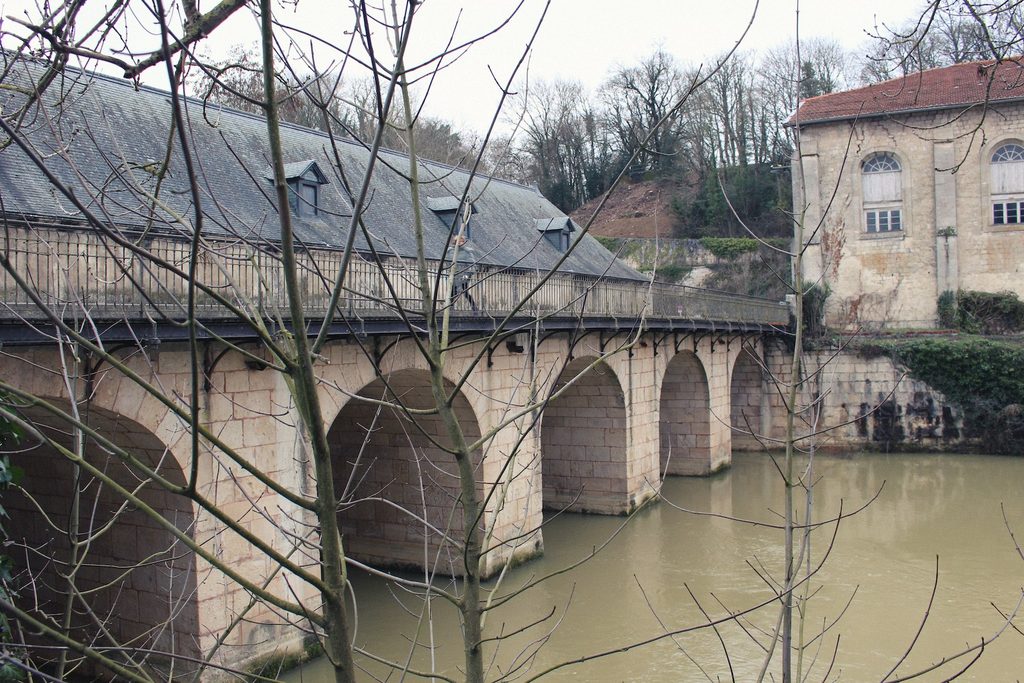
This is no ordinary bridge. Built from 1680 to 1685 following plans drawn up by renowned military engineer Vauban, it was part of a sophisticated defensive system. The bridge’s water-control lock could be used to flood the surrounding land in order to stave off attacks. These days, it’s also a scenic part of town on the waterfront.
15. Porte Saint-Paul (Saint Paul Gate)
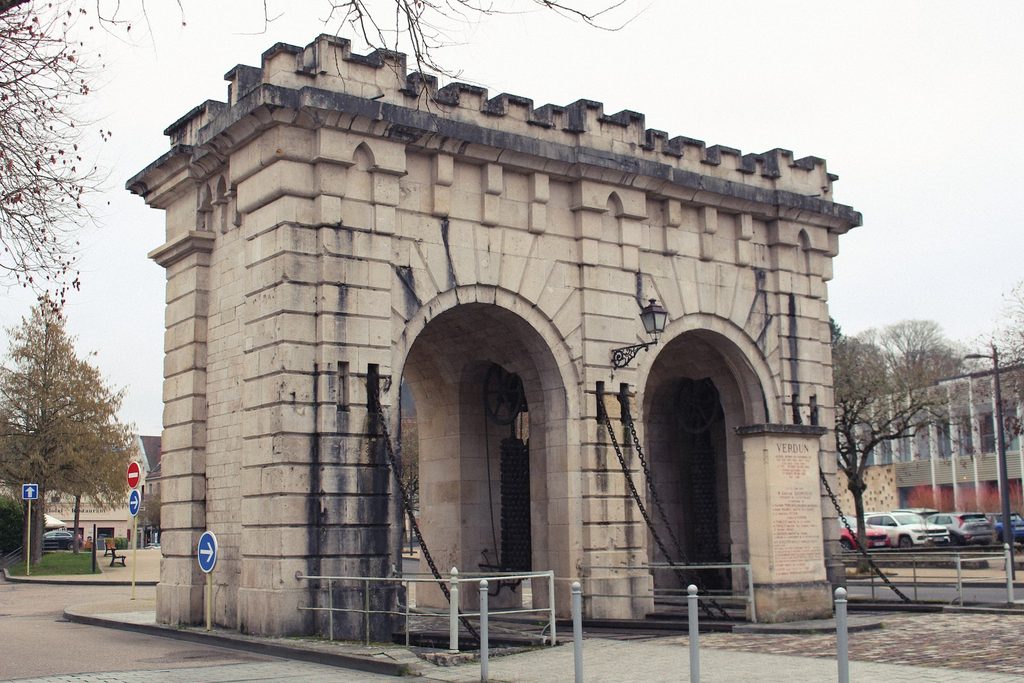
This city gate located near the Gare de Verdun (Verdun Train Station) was added to the city walls in the 19th century and each of its two arches was formerly attached to a drawbridge. Most notably, the gate served the many soldiers who travelled to and from the train station, the city centre and the nearby barracks.
When the city walls, badly damaged by bombing during World War I, were pulled down in 1920, the Porte Saint-Paul (Saint Paul Gate) was preserved.
16. Maison du Pape Jules II (House of Pope Julius II)
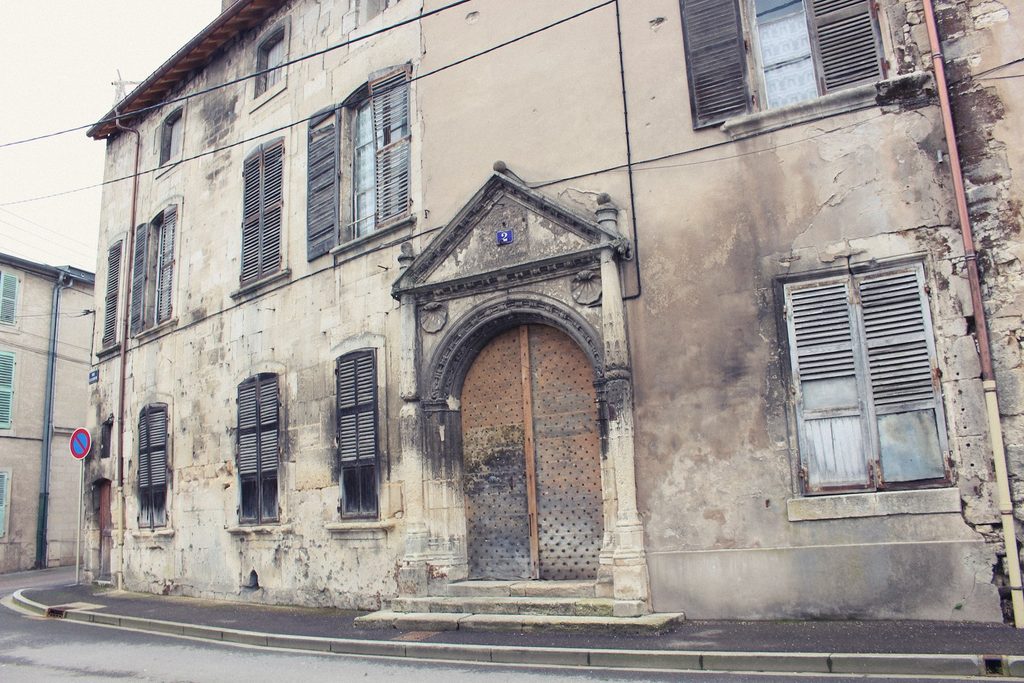
Pope Julius II is said to have stayed in Verdun in 1479 when he was negotiating with King Louis XI for the release of Bishop Guillaume III d’Haraucourt, who was imprisoned for treason.
The current Renaissance House, which is in a state of disrepair, was actually built in 1533, 20 years after Pope Julius II’s death. So, the rumour that he stayed there is just an urban legend, one which the inscription IVL IL PONT MAX (Julius II, Supreme Pontiff) above the entrance has certainly helped to perpetuate. I’ll admit I was disappointed without even knowing why.
17. Boutique Dragées Braquier (Braquier Dragée Boutique)
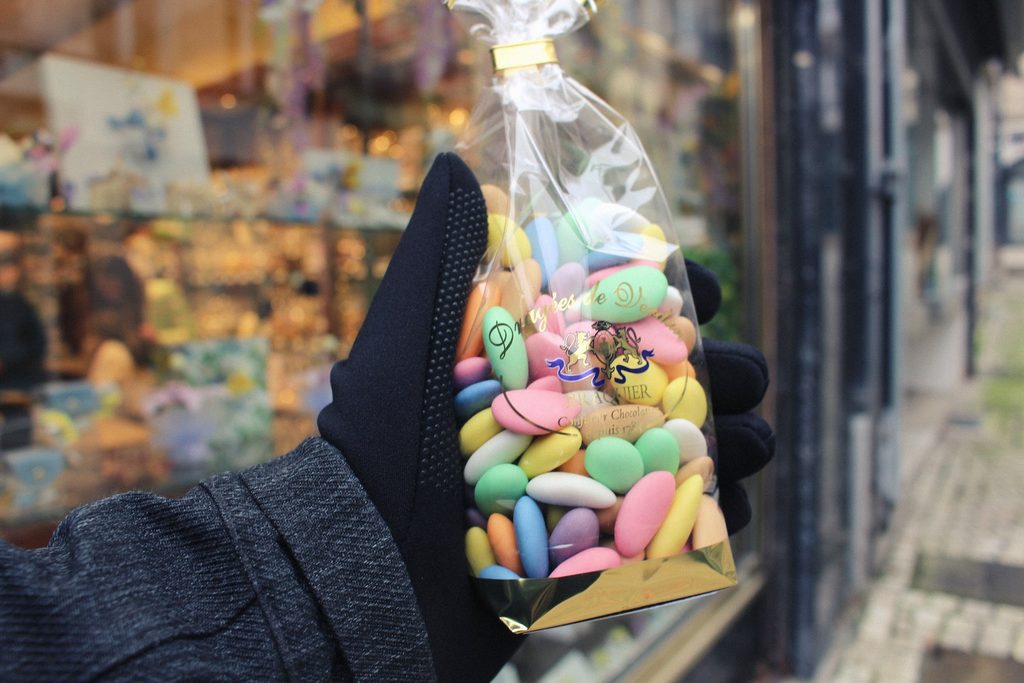
Verdun’s dragées are a type of sweet that is well-known all over France. They consist of a bite-sized centre, usually made out of almonds, coated in an outer shell, usually made of sugar or chocolate. They were initially invented in Verdun in 1220 by an apothecary who coated medicinal almonds in sugar and honey in order to preserve them.
The Boutique Dragées Braquier (Braquier Dragées Boutique) at 3 Rue Pasteur feels like it’s in a time warp due to its old-fashioned décor and is worth a visit just for the atmosphere.
18. Fabrique de Dragées Braquier (Braquier Dragée Factory)
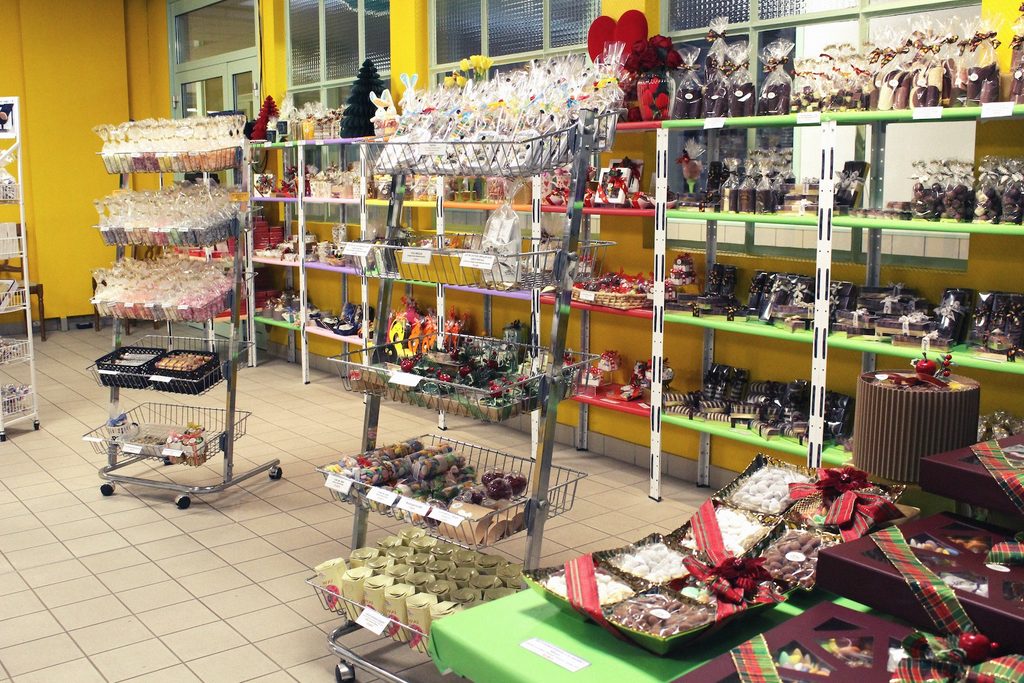
If you really have a sweet tooth, you can visit Braquier’s dragée factory at 50 rue du Fort de Vaux. They have a bigger selection of dragées and other sweet treats than the boutique at 3 Rue Pasteur, although the décor is not as good.
Best of all, you can observe how dragées are made in their factory. The visit is free, comes with an audio-guide and takes about 35 minutes.
19. Porte Neuve (New Gate)
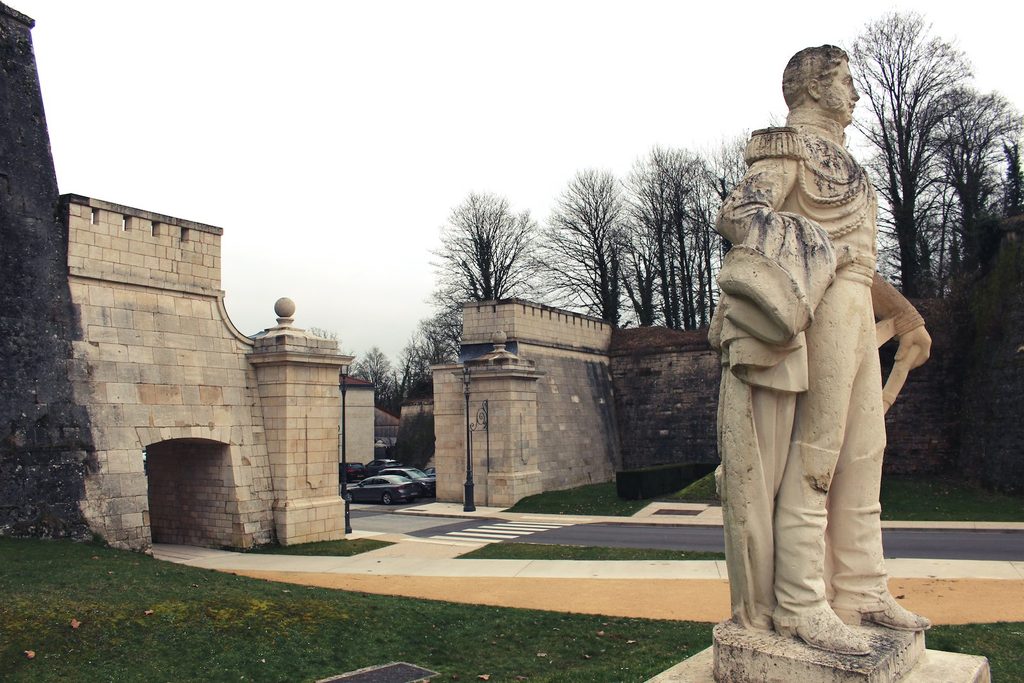
Porte Neuve (New Gate) stretches across the road right next to the Carrefour des Maréchaux (Crossroad of the Marshals) and the Musée du Poste de Garde (Museum of the Guardhouse). Originally built in 1825, it was part of the guardhouse that controlled traffic into the city. After decades of lying in ruins, it was finally restored in 2022 and now looks maybe a bit too new.
20. Chapelle Saint-Nicolas (Saint Nicolas Chapel)
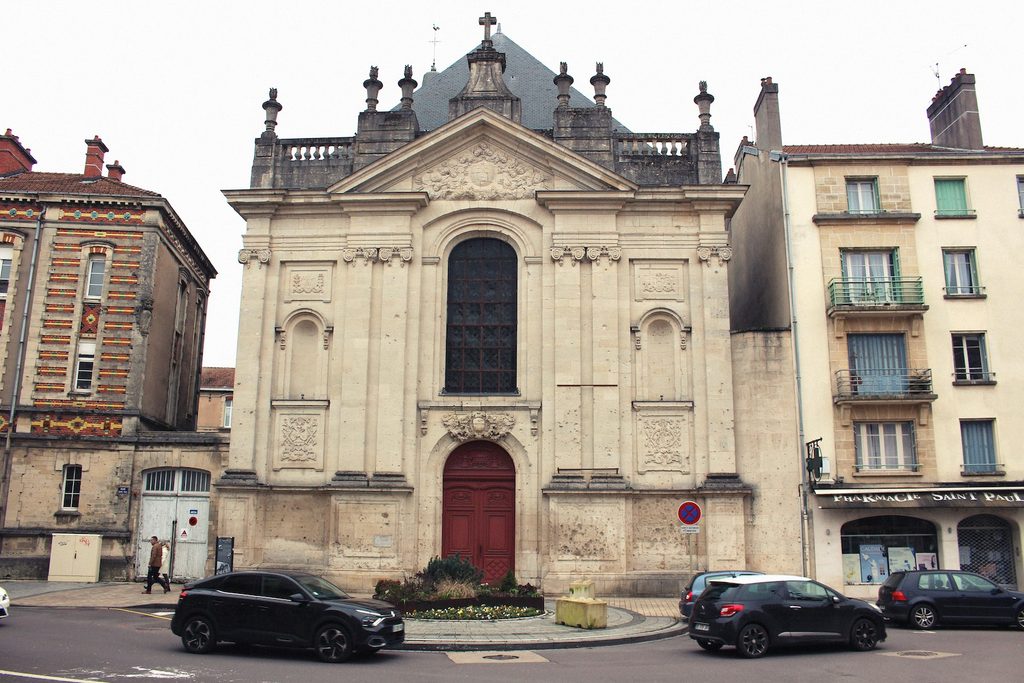
This chapel is located in the city centre and dates back to the 16th century, when it was part of a Jesuit college. It has been deconsecrated and is no longer used as a place of worship today. The façade of the chapel bears traces of bullets and shelling from World War I.
21. Tour des Plaids (Tower of the Plaids) / Tour du Puty (Tower of the Puty)
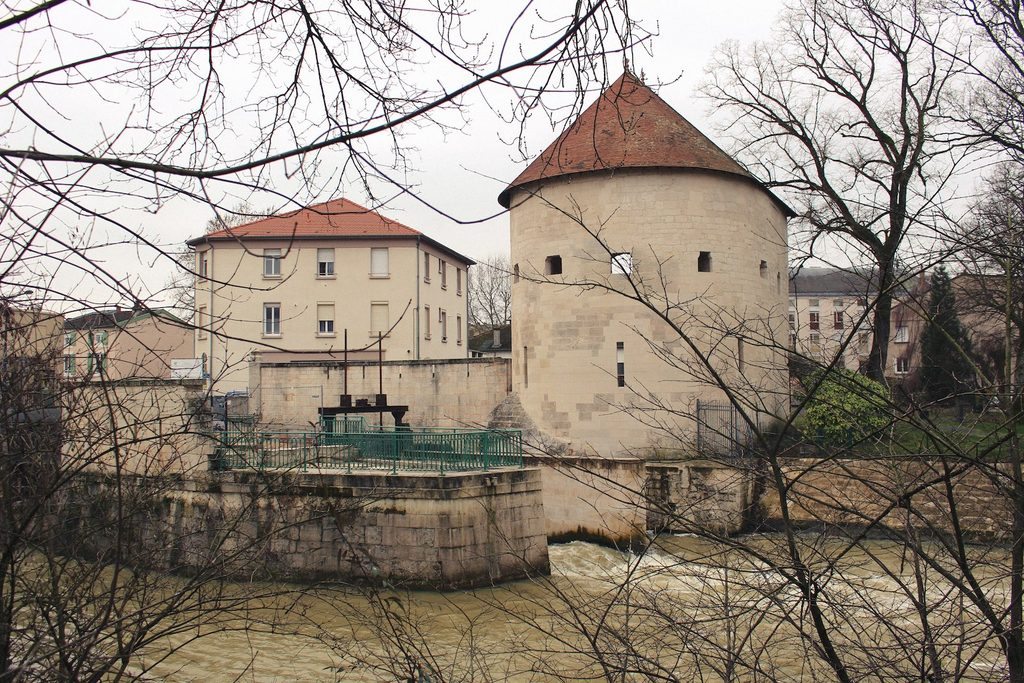
This historic tower, which goes by several names, was built in the 14th century and formed part of the medieval ramparts of Verdun. It occupies a scenic position on the banks of the Canal du Puty (Puty Canal) and has a distinctive horseshoe shape. From medieval times until the 20th century, the tower was fitted out with a water-mill.
22. Tour de l’Islot (Tower of the Islot) / Tour des Minimes (Minimes Tower)
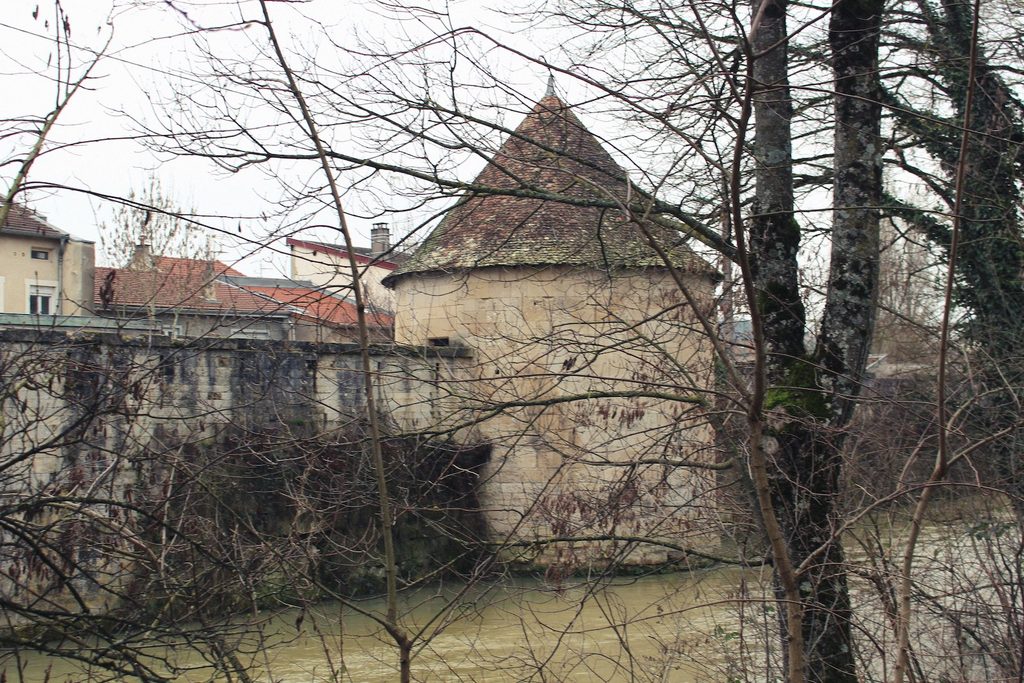
As you follow the Canal du Puty (Puty Canal) south from the Tour des Plaids, you’ll come across the circular Tour de l’Islot (Tower of the Islot), which dates back to the 13th century and was part of Verdun’s medieval ramparts. The tower enabled the inhabitants of the city to preempt attacks coming from outside.
23. Parc Japiot (Japiot Park)
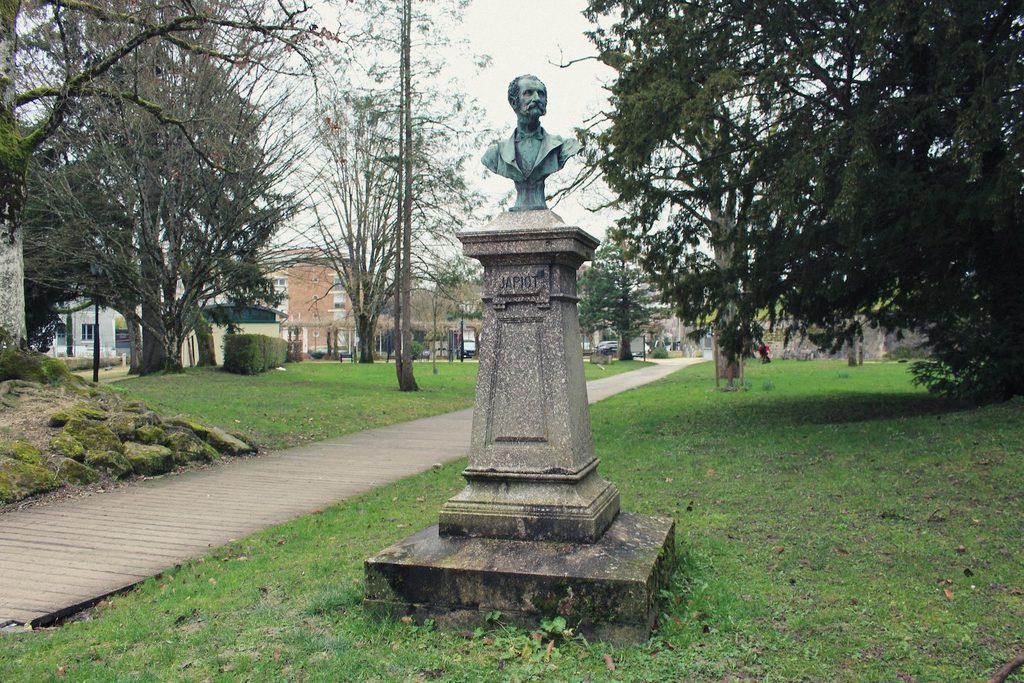
This park is the biggest green space in the city centre. It was built on marshy ground, and I can say from experience that it gets quite muddy when it rains. I was sliding all over the place! It is also home to an elegant building, the Pavillon Japiot (Japiot Pavilion), constructed in the Belle Époque style during the 20th century.
24. Marché couvert (Covered market)
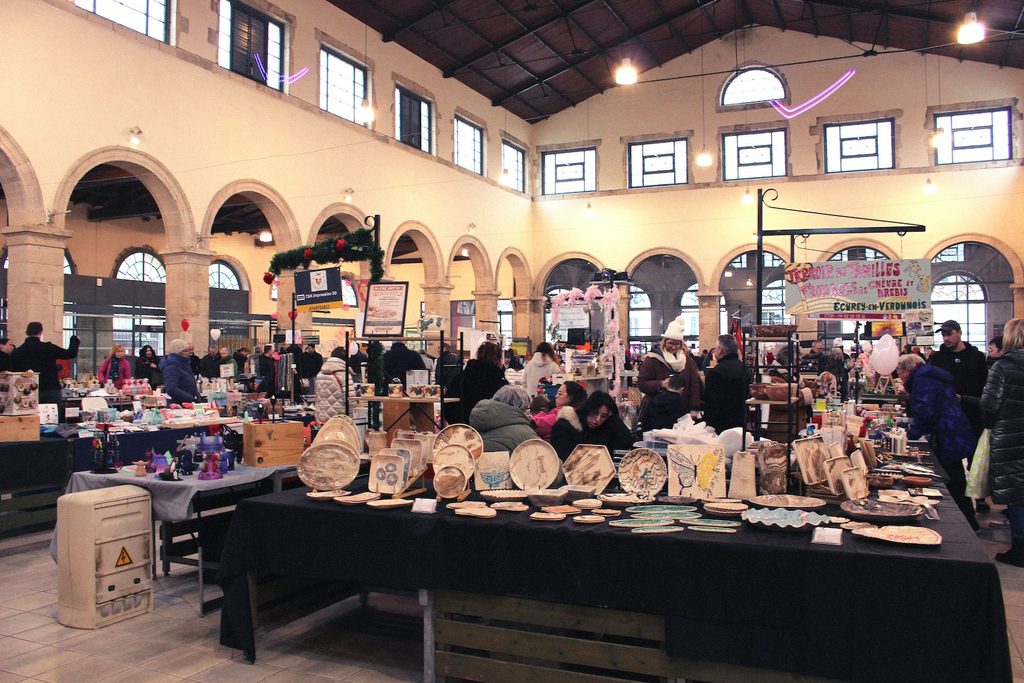
Verdun’s marché couvert (covered market) is not a market in the usual sense of the term. Rather, it is a lively place where various stallholders and local creators sell their wares in a charming atmosphere. They often organise themed markets, which are fun to browse.
25. La Défense de Rodin (The Defence by Rodin) / L’Appel aux armes de Rodin (The Call to Arms by Rodin)
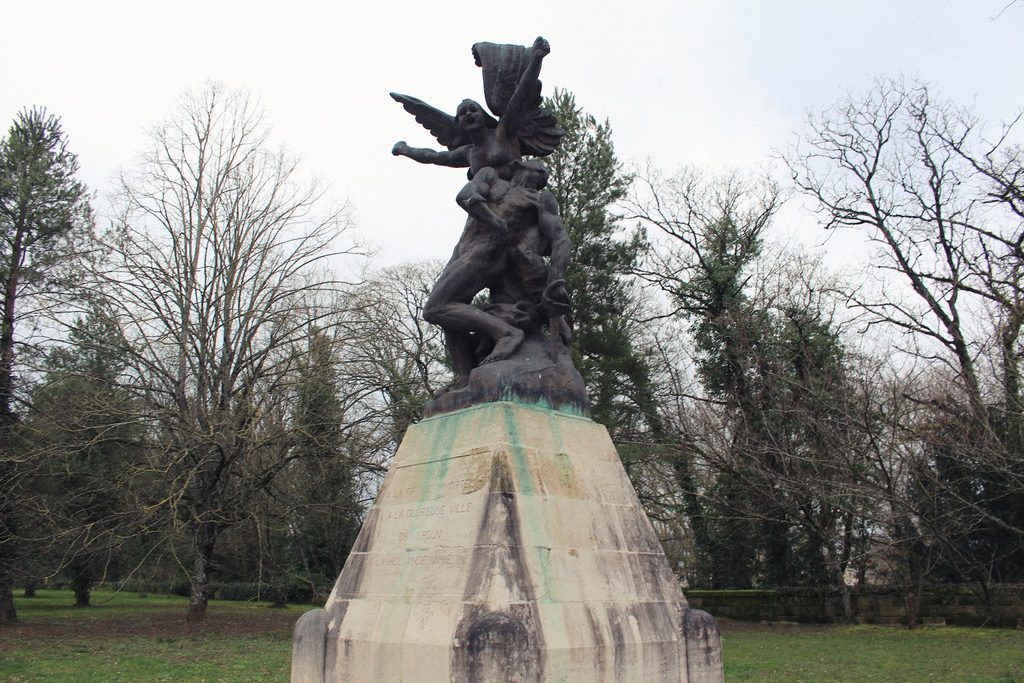
This dramatic sculpture depicts a wounded soldier watched over by a winged figure representing victory. It is a copy of a work by Auguste Rodin, one of France’s greatest sculptors, enlarged fourfold by Henri Lebossé and cast in bronze in 1919.
26. Monument aux femmes du monde rural (Monument to the Women of the Rural World)
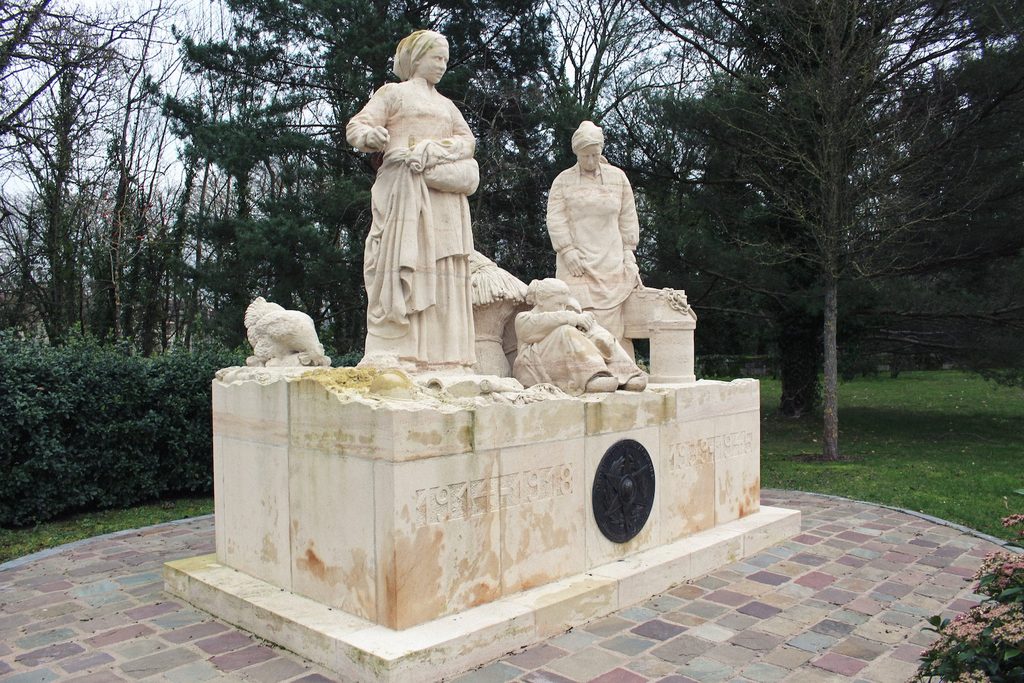
This sculpture commemorates the rural women who made significant contributions during the two world wars but who are often overlooked in modern history. In rural France, as men left to fight in the wars, the work of women was essential to ensuring that France could continue to feed its population.
Where to eat in Verdun – my recommendations
Not much has changed in Verdun since Gui’s childhood, and we were able to eat at two Verdun restaurants that have been in operation for decades.
Aux délices
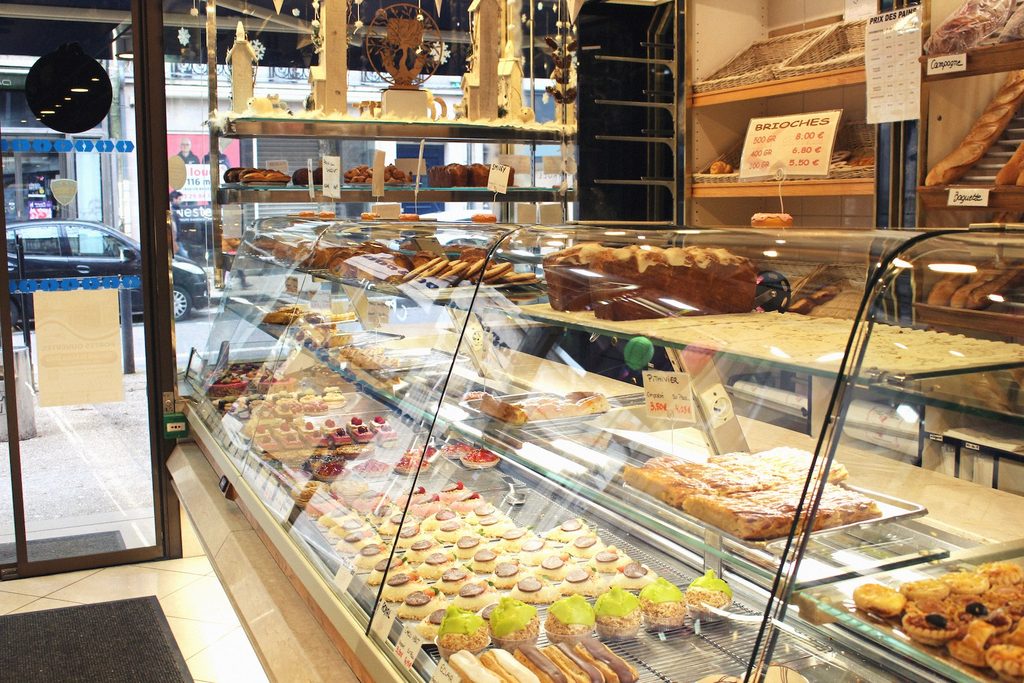
Aux délices is a bakery, chocolate shop and café with seating in the back. Gui has memories of eating there as a child! Many of Lorraine’s delicacies, such as quiche lorraine and tourte lorraine, are pastries that can be sampled here at an affordable price.
Chez Mamie
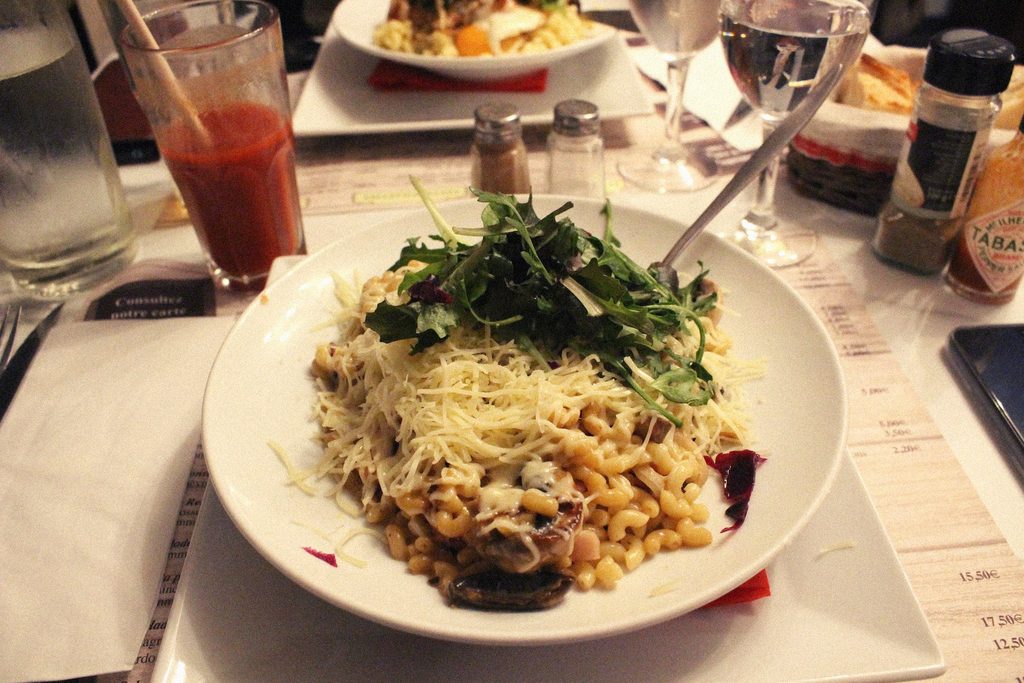
I felt like I simply had to mention Chez Mamie! They’ve been operating for ages and serve some of the heartiest portions I’ve ever seen in France. Good thing, as Gui and I were starving! Their menu offers a down-to-earth, delicious selection of French home cooking. The food is yummy, the interior inviting and a little eccentric, and the staff friendly.
Day trips from Verdun
- Metz, the biggest city in Lorraine and the third-largest city in the Grand Est region, is about 1 hour 15 minutes away by train from Verdun.
- Reims, the biggest city in Champagne-Ardenne, can be reached in about 1 hour 40 minutes from Verdun by coach and train, or in about 1 hour 20 minutes by car, while Troyes is about two hours away by car.
- Bar-le-Duc is a historic town that is accessible by bus from Verdun in about an hour.

Comments are closed.