

Angers is the biggest city in the UNESCO-listed Loire Valley area. Located near Chalonnes-sur-Loire at the westernmost edge of the UNESCO site, Angers is a wonderful gateway city to the rest of the Loire Valley, with a rich roster of sights, including a beautiful medieval castle.
The charming medium-sized city in the Pays de la Loire region of northwestern France has a well-preserved historic centre and several excellent museums. Today, it serves as the capital of the department of Maine-et-Loire.

Gui lived in Angers for ten years and still has family in the area. So he knows the city very well indeed! Thanks to him, we have compiled a comprehensive list of sights for first-time visitors to Angers, mostly reachable on foot within the city centre.
Contents:
- Is Angers worth visiting?
- How many days to visit Angers
- 36 things to do in Angers, France
- 1. Château d’Angers (Angers Castle)
- 2. Cathédrale Saint-Maurice d’Angers (Angers Cathedral of Saint Maurice)
- 3. Musée des Beaux-Arts d’Angers (Angers Museum of Fine Arts)
- 4. La Maison d’Adam (The House of Adam)
- 5. Place du Ralliement (Square of the Rally)
- 6. Jardin du Mail (Garden of the Boulevard)
- 7. Terra Botanica
- 8. Église Notre-Dame-des-Victoires d’Angers (Notre-Dame-des-Victoires Church of Angers)
- 9. Jardin des Plantes d’Angers (Botanic Garden of Angers)
- 10. Rue Saint-Laud (Saint Laud Street)
- 11. Rue Saint-Aubin (Saint Aubin Street)
- 12. Tour Saint-Aubin (Saint Aubin Tower)
- 13. La Maison Bleue (The Blue House)
- 14. Apocalypsis d’Okuda (Apocalypsis by Okuda)
- 15. Galerie David d’Angers (David d’Angers Gallery)
- 16. Musée Pincé (Pincé Museum)
- 17. Banks of the Maine
- 18. Collégiale Saint-Martin (Saint Martin Collegiate Church)
- 19. Muséum des sciences naturelles (Museum of Natural Sciences)
- 20. Le Repaire Urbain (The Urban Hideout)
- 21. Église Saint-Joseph (Saint Joseph Church)
- 22. Maison du Vin de l’Anjou (House of Wine of the Anjou)
- 23. Palais épiscopal (Episcopal Palace)
- 24. Esplanade Cœur de Maine (Esplanade Heart of the Maine)
- 25. Biltoki Les Halles Cœur de Maine (Biltoki The Market Heart of the Maine)
- 26. Musée Jean-Lurçat et de la Tapisserie Contemporaine (Museum of Jean-Lurçat and Contemporary Tapestry)
- 27. Place du Général Leclerc (General Leclerc Square)
- 28. Cour d’appel d’Angers (Court of Appeal of Angers)
- 29. Église Saint-Laud (Saint Laud Church)
- 30. Pont de Verdun (Verdun Bridge)
- 31. Cale de la Savatte (Slipway of the Savatte)
- 32. Parc Balzac (Balzac Park)
- 33. Église de la Trinité d’Angers (Angers Church of the Trinity)
- 34. Place de la Laiterie (Dairy Square)
- 35. Cloître et Abbaye du Ronceray (Ronceray Cloister and Abbey)
- 36. Place du Tertre Saint-Laurent (Saint-Laurent Hill Square)
- Day trips from Angers
Is Angers worth visiting?
- Top-notch historical and cultural sights – If you’re wondering what to see in Angers, you won’t be at a loss, as the city is packed with historical and cultural sights, including the magnificent Château d’Angers (Angers Castle), home to the Tapisserie de l’Apocalypse (Apocalypse Tapestry), which was inscribed on the UNESCO Memory of the World International Register in 2023.
- Located in the UNESCO-listed Loire Valley – Angers is a gateway to the Loire Valley and its many historical towns and castles, such as Saumur, Tours, Chinon, Amboise and Blois, which can be visited on the a day trip. It is also a good place to shop for wines from the region.
- Highly walkable: The city is compact and most of the sights in this guide can be visited on foot, which is another plus.
How many days to visit Angers
There are many important sights in Angers, including the castle and museums. If you want to comfortably visit the major sights in Angers without feeling rushed, you would need at least two full days.
If you can afford to spend three or four days in Angers, you’ll be able to see most of the key sights at a more relaxed pace.
36 things to do in Angers, France
We’ve put together what I believe is a fairly comprehensive list of all the major sights in Angers. Which sights you decide to prioritise will depend on your interests, but we’ve tried to order them more or less in order of importance.
If you prefer, we’ve also prepared one-, two- and three-day itineraries for Angers that you can use as walking tours, making navigation easier.
1. Château d’Angers (Angers Castle)
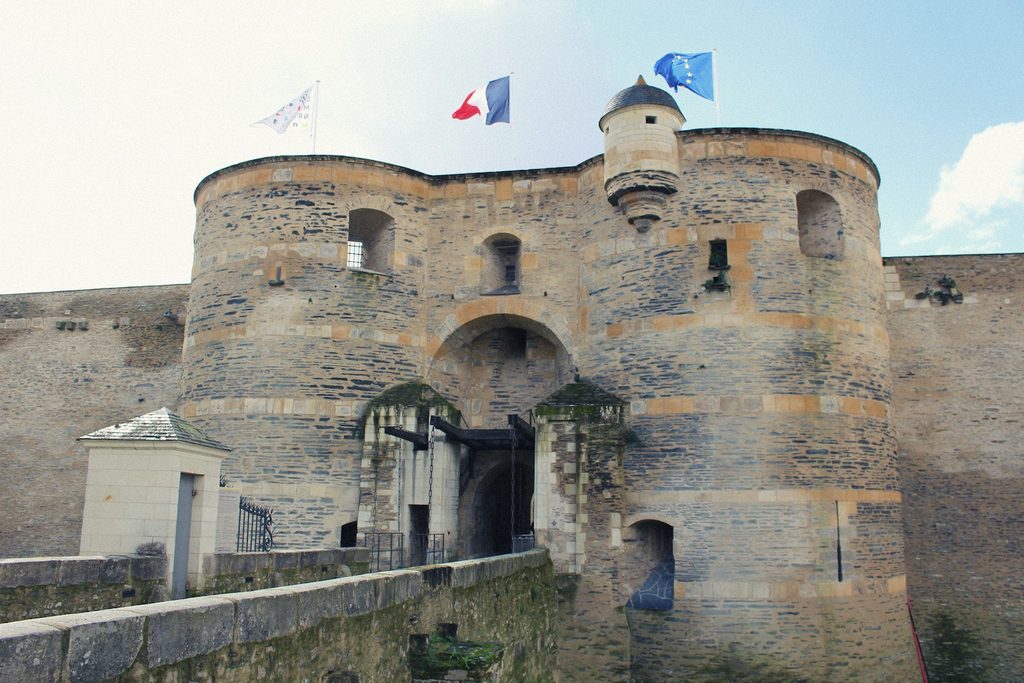
The most important sight in Angers is without a doubt the city’s medieval castle, which dates back to the ninth century and housed the counts of Anjou. The castle is also located in the UNESCO-listed zone in the Loire Valley.
Entry to the castle enables you to explore its grounds as well as its beautiful hanging gardens. Another key highlight for visitors is the Tapisserie de l’Apocalypse (Apocalypse Tapestry), a massive set of tapestries telling the chilling story of the Bible’s Book of Revelation, now inscribed as a UNESCO Memory of the World.
2. Cathédrale Saint-Maurice d’Angers (Angers Cathedral of Saint Maurice)
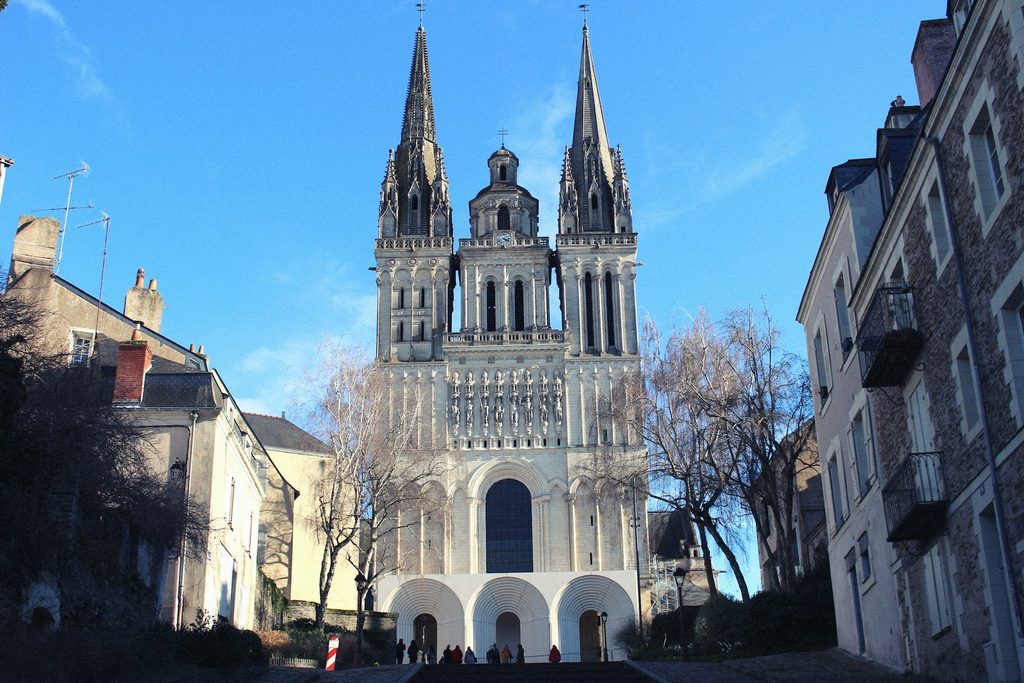
The Cathédrale Saint-Maurice d’Angers (Angers Cathedral of Saint Maurice), which sits at the top of the long flight of stairs on the Montée Saint-Maurice (Saint Maurice Slope), is one of the city’s landmarks and a fine specimen of Romanesque and Plantegenet or Angevine Gothic architecture. The cathedral is also home to one of Europe’s richest collection of medieval tapestries.
It was built from the 11th to 16th centuries, but these days, its frescos and gargoyles share the stage with an unusual contemporary gallery by Kengo Kuma, created to protect the medieval entrance, which has been restored but remains fragile.
3. Musée des Beaux-Arts d’Angers (Angers Museum of Fine Arts)

Angers is home to many good museums, but the most prominent is probably the Musée des Beaux-Arts d’Angers (Angers Museum of Fine Arts), housed in a stately 15th-century building and a 17th-century seminary.
The museum displays archaeological, artistic and ethnographic works dating from prehistory to the present day, as well as paintings, sculptures and other artwork from the Middle Ages onwards.
Take note that there’s a Billet Découverte (Discovery Ticket) that gives you entry to all six museums in Angers at a reduced fee.
4. La Maison d’Adam (The House of Adam)

La Maison d’Adam (The House of Adam) is Angers’ oldest house and one of the city’s best-loved landmarks. The beautiful medieval structure located at Place Saint-Croix, just behind the cathedral, was built in 1491.
Its name is a nod to Adam and Eve, sculptures of whom once surrounded a carving of the tree of life. The latter can still be seen at the corner of the building on the ground floor. Look out for other interesting carvings on the pillars and beams, including a centaur and Mary being attacked by a dragon.
5. Place du Ralliement (Square of the Rally)

Place du Ralliement (Square of the Rally) is one of the most important town squares in Angers. It received its name from the many civil and military gatherings held there after the French Revolution, including public executions by guillotine. Today, it is home to the Grand Théâtre d’Angers (Grand Theatre of Angers), which functions as a theatre and opera house.
6. Jardin du Mail (Garden of the Boulevard)

Angers is known for being home to many parks and gardens, but the stately Jardin du Mail (Garden of the Boulevard) is probably its most iconic. Located right in the centre of town, this regal garden, known for its grand avenues, is presided over by four giant bronze statues of lions. Climbing onto the back of one of these lions is a rite of passage for young residents of Angers.
7. Terra Botanica
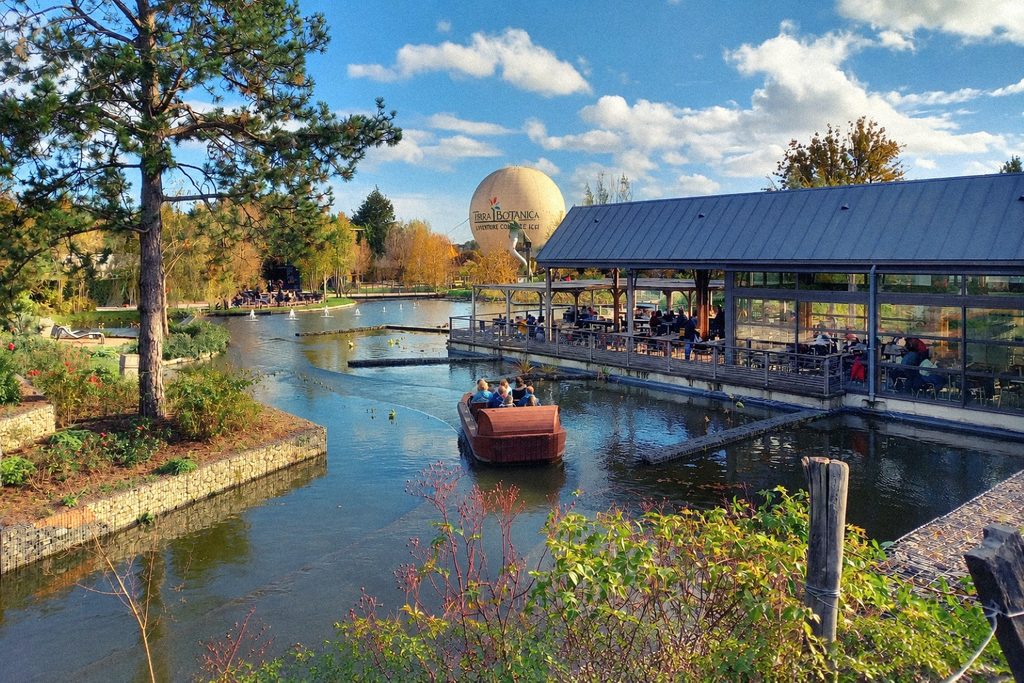
Angers has its very own theme park, Terra Botanica, which as its name suggests is plant-themed. While you won’t find any roller coasters here, there are several kid-friendly rides. But the main stars of the theme park are its collection of over 500 plants, and displays that change with the seasons.
8. Église Notre-Dame-des-Victoires d’Angers (Notre-Dame-des-Victoires Church of Angers)

This distinctive-looking church, built in the Romano-Byzantine style, with a striped façade, is actually quite recent, having been completed in 1904, and overlooks one of the biggest parking lots in the city centre of Angers. It’s worth a visit for its intricate Gothic-inspired interior and stunning façade.
9. Jardin des Plantes d’Angers (Botanic Garden of Angers)
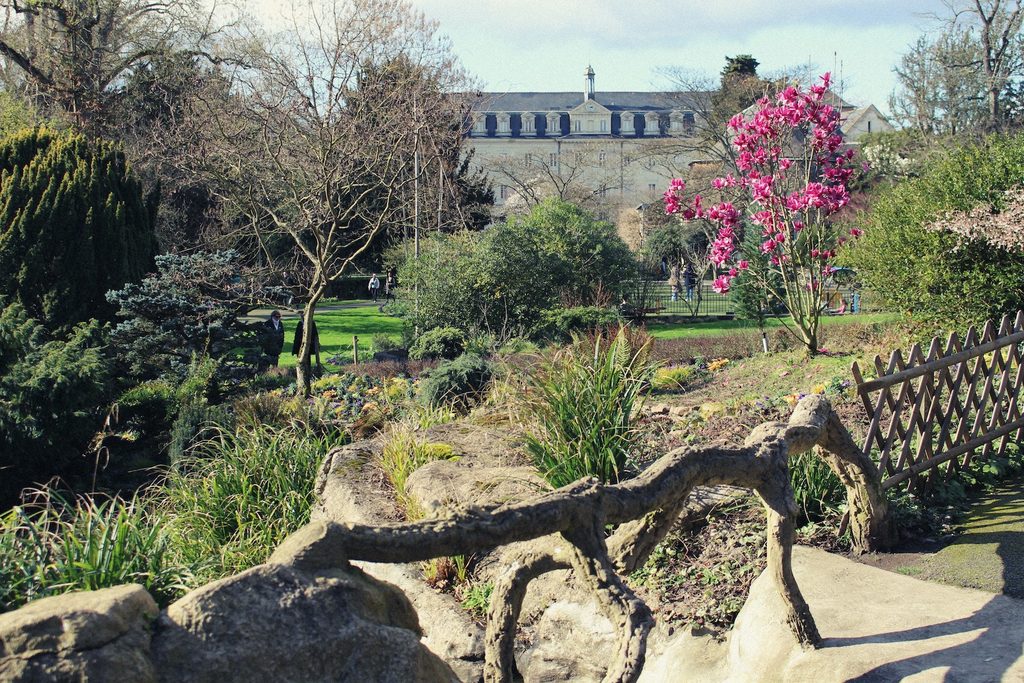
Angers’ botanic gardens, which opened in 1905, offer a lovely setting for an afternoon stroll. The four-hectare English-style park has been decorated with a lovely pond, little waterfalls and statuary.
10. Rue Saint-Laud (Saint Laud Street)
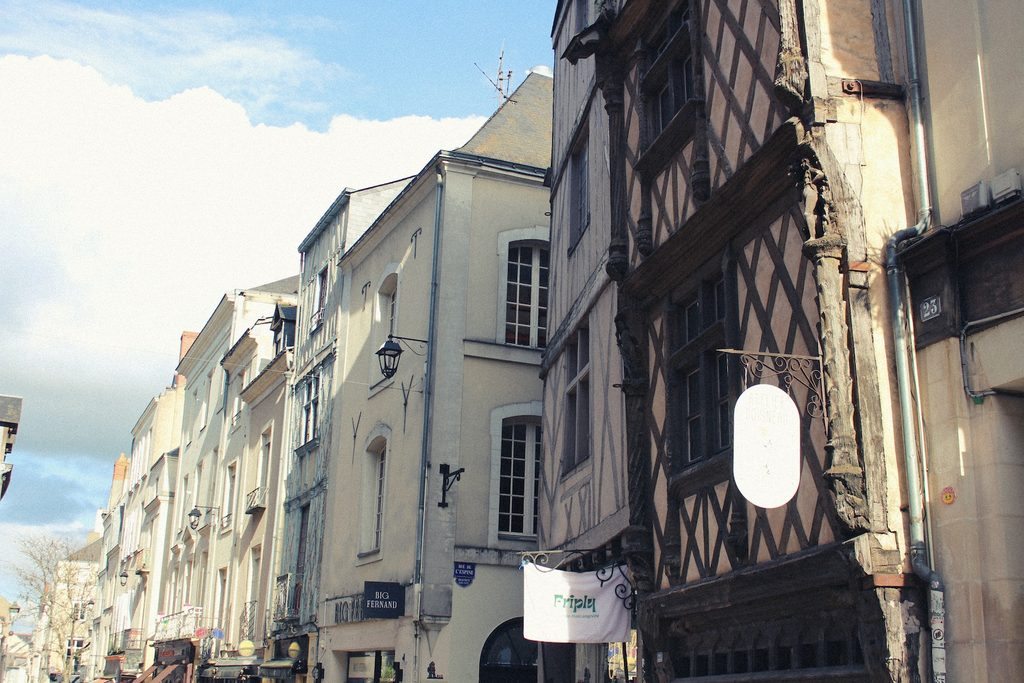
The city centre of Angers is home to many picturesque streets, but if I had to pick just one to visit, Rue Saint-Laud (Saint Laud Street) would get my vote thanks to its selection of historic buildings and half-timbered houses. It is one of the oldest streets in the city, having served as a key entry point to the city during the Middle Ages. Today, it’s also one of Angers’ best places to party thanks to its concentration f bars!
11. Rue Saint-Aubin (Saint Aubin Street)

Rue Saint-Aubin (Saint Aubin Street) is one of the most important commercial thoroughfares in Angers, both historically and in the present day. Whether you want to shop, have a coffee or people-watch, you’ll be able to get in on the action on this busy street.
12. Tour Saint-Aubin (Saint Aubin Tower)

The imposing Tour Saint-Aubin (Saint Aubin Tower) is all that remains of the Abbaye Saint-Aubin (Saint Aubin Abbey), which was founded in the sixth or seventh century and remained in use until the French Revolution.
The 54-metre tower was built later, in the 12th century, and during the Middle Ages served as a watchtower. The ground floor now serves as an art exhibition space that is free to visit.
13. La Maison Bleue (The Blue House)

This delightful building with its whimsical blue mosaic was built from 1927 to 1929. It is Angers’ best-known Art Deco building, and today hosts a retail space on the ground floor.
14. Apocalypsis d’Okuda (Apocalypsis by Okuda)

Apocalypsis is one of the most iconic examples of street art in the city centre of Angers. Located at the corner of Boulevard du Maréchal Foch and Rue Saint-Aubin, it is the work of Okuda San Miguel, one of the world’s most famous street artists, whose murals can be seen all over the world.
15. Galerie David d’Angers (David d’Angers Gallery)

This gallery, housed in a 13th-century abbatial church, showcases the works of Pierre-Jean David (1788-1856), a sculptor from Angers also known as David d’Angers. The atmospheric gallery displays his many sculptures, medallions and drawings.
This is one of the six museums in Angers that you can visit at a reduced price with the Billet Découverte (Discovery Ticket).
16. Musée Pincé (Pincé Museum)

This museum is dedicated to ancient civilisations around the world, including Ancient Greece, Rome, Egypt, China, Japan and the Pre-Columbian civilisation. Its collection includes an Egyptian sarcophagus lid and masks used in Japanese theatre. The museum itself is housed in a beautiful Renaissance building dating back to the 16th century.
Get the Billet Découverte (Discovery Ticket) to visit all six museums in Angers at a lower price.
17. Banks of the Maine

Although Angers is located in the Loire Valley, the river that runs through the centre of town, the Maine, is actually a tributary of the Loire. Stroll along the banks of the Maine on the castle side, and then cross over to the other side, where you’ll find the sought-after neighbourhood La Doutre.
18. Collégiale Saint-Martin (Saint Martin Collegiate Church)

This former church in the city centre of Angers has undergone 20 years of archaeological excavation and restoration work and is now open to the public as an exhibition space showcasing the building’s sumptuous architecture, as well as an eclectic roster of temporary exhibitions on art and culture.
19. Muséum des sciences naturelles (Museum of Natural Sciences)

This museum has a decent collection of animal and plant specimens illustrating the world’s biodiversity. It’s not the biggest natural history museum ever, but makes for a nice visit if you’re looking for something to do indoors.
If you’re interested in other museums in Angers, you might be able to save money by getting a Billet Découverte (Discovery Ticket) that offers entry to all six museums in Angers.
20. Le Repaire Urbain (The Urban Hideout)

Located next door to the Musée des Beaux-Arts d’Angers (Angers Museum of Fine Arts), Le Repaire Urbain (The Urban Hideout) is home to a centre, known as l’Artothèque, dedicated to contemporary art as well as Angers’ heritage. On the ground floor, you’ll find historical artefacts found in Angers, while the second floor hosts a revolving programme of contemporary art exhibitions. It’s free to visit!
21. Église Saint-Joseph (Saint Joseph Church)

If you’re strolling down Boulevard du Maréchal Foch, you might notice the imposing Église Saint-Joseph looming at the end of Rue des Arènes. This Neo-Gothic church was previously the chapel of an 18th-century school located just outside the city walls of Angers.
22. Maison du Vin de l’Anjou (House of Wine of the Anjou)

This wine centre and boutique is dedicated to wines grown in Anjou (the historic county of which Angers was the capital) and Saumur. The centre is staffed by oenologists who can teach you about the region’s wines and conduct a free wine-tasting session.
23. Palais épiscopal (Episcopal Palace)

Angers’ Palais épiscopal (Episcopal Palace), also known as the Palais de Tau (Tau Palace), is located near the cathedral and previously served as the home of the bishop. The word “palais” is actually used to designate a home or a house, rather than an actual palace, but it is nonetheless an impressive example of medieval architecture. It is usually not open to the public except via guided tours, but you can admire it from the outside.
24. Esplanade Cœur de Maine (Esplanade Heart of the Maine)

This wide, grassy space on the banks of the Maine is a favourite hangout spot for locals on sunny days, and also functions as an interface between the city centre and the neighbourhood on the other side of the river, La Doutre.
25. Biltoki Les Halles Cœur de Maine (Biltoki The Market Heart of the Maine)

This modern food court located just behind Esplanade Cœur de Maine (Esplanade Heart of the Maine) is a good place for a quick and relatively inexpensive meal in a pleasant setting. Offerings include a bakery, artisanal French products and international cuisine.
26. Musée Jean-Lurçat et de la Tapisserie Contemporaine (Museum of Jean-Lurçat and Contemporary Tapestry)

Angers is home not only to the Tapisserie de l’Apocalypse (Apocalypse Tapestry) at the Château d’Angers (Angers Castle) but also a whole collection of other, more contemporary tapestries, many of which you can see at the Musée Jean-Lurçat et de la Tapisserie Contemporaine (Museum of Jean-Lurçat and Contemporary Tapestry).
This museum is one of six that you can visit at a reduced price using the Billet Découverte (Discovery Ticket).
There’s also a Pass Tapisserie (Tapestry Pass) offering access to the Château d’Angers (Angers Castle) and the Musée Jean-Lurçat et de la Tapisserie Contemporaine (Museum of Jean-Lurçat and Contemporary Tapestry) at a lower price.
27. Place du Général Leclerc (General Leclerc Square)

This big square in the centre of Angers is more than just a huge expanse of concrete. It also hosts the city centre’s biggest market every Saturday morning, with more than 150 stalls selling everything from produce to clothes.
28. Cour d’appel d’Angers (Court of Appeal of Angers)

If you happen to pass by Place du Général Leclerc (General Leclerc Square), look out for the Cour d’appel d’Angers (Court of Appeal of Angers), a stately neoclassical building located just across the road.
29. Église Saint-Laud (Saint Laud Church)
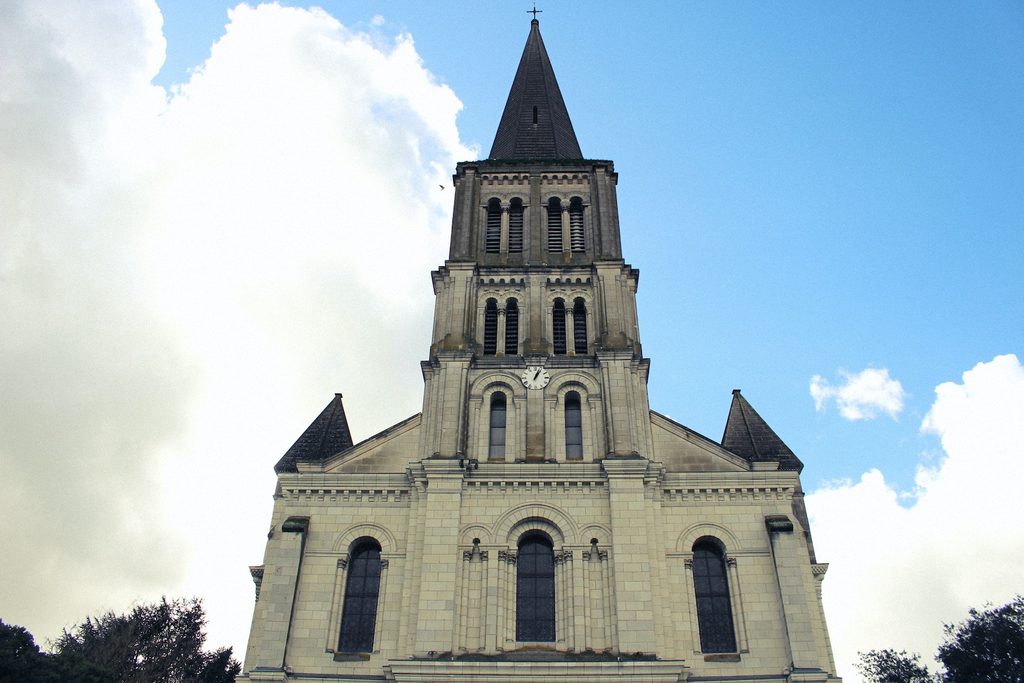
If you’re coming to Angers via train, Église Saint-Laud (Saint Laud Church) is one of the first churches you’ll see as you make your way on foot to the city centre. Built in the late 19th century on the site of an earlier chapel, the church was bombed during World War II and later rebuilt.
30. Pont de Verdun (Verdun Bridge)

Pont de Verdun (Verdun Bridge) connects the city centre to the La Doutre neighbourhood. Built from 1900 to 1904 to replace an earlier bridge, it survived World War I and World War II despite bombing. Today, it is the best-known bridge in Angers and flanked by cafés and restaurants on the La Doutre side. Look out for street musicians in sunny weather.
31. Cale de la Savatte (Slipway of the Savatte)

This riverside zone is one of Angers’ most popular hangout spots along the Maine. Located in La Doutre, the area enjoys stunning views of the Château d’Angers (Angers Castle) and is home to a concentration of cafés, restaurants and bars.
32. Parc Balzac (Balzac Park)

This 45-hectare park runs along the Maine and offers what is probably the biggest dose of nature you can get within easy walking distance from the city centre. In addition to numerous gardens and picnic spots, it also comprises an urban forest with over 56,000 trees.
33. Église de la Trinité d’Angers (Angers Church of the Trinity)

This church in the La Doutre neighbourhood is a good example of Gothic architecture from Angers. Due to overwhelming demand at the nearby chapel of the Abbaie du Ronceray (Ronceray Abbey), the abbesses were inspired to build and found the church to serve the local parish. Construction began at the end of the 12th century but some elements, such as the bell tower and the stained glass windows, were added later.
34. Place de la Laiterie (Dairy Square)
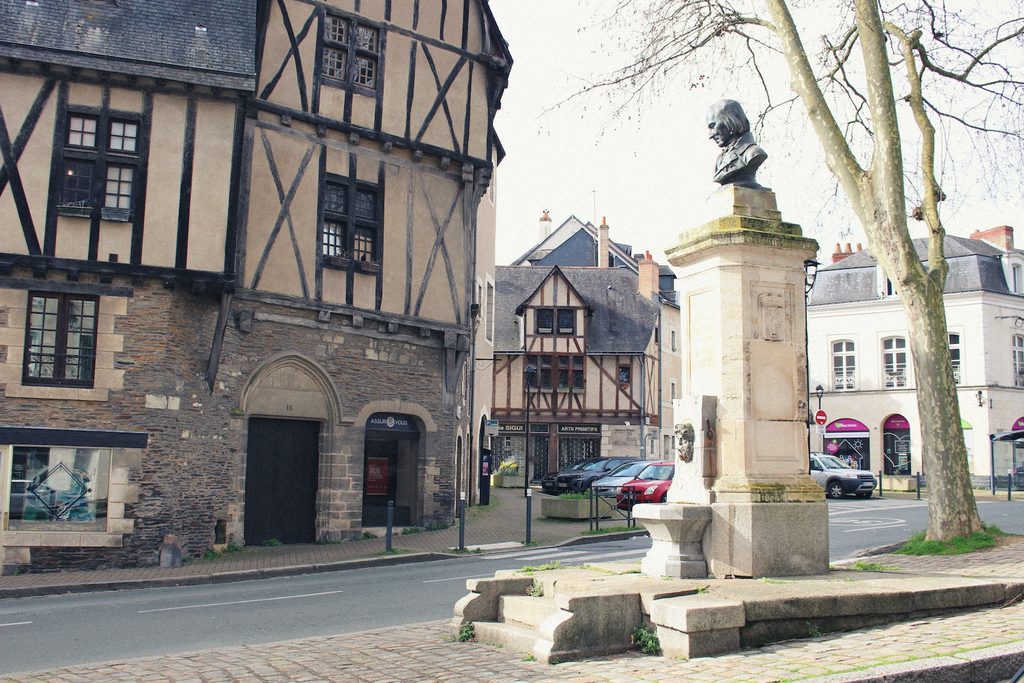
Place de la Laiterie (Dairy Square) is one of the most picturesque town squares in the La Doutre neighbourhood. While the square is small, it is one of the prettiest in Angers. It was formerly a bustling commercial centre where milk, butter and cheese were sold, hence the name.
35. Cloître et Abbaye du Ronceray (Ronceray Cloister and Abbey)

This former abbey was founded in the 11th century, and was a powerful Benedictine monastery for centuries. It is now occupied in part by university students from the École nationale supérieure d’Arts et Métiers since 1815, the first students having sought refuge there during the War in the Vendée, when insurgents opposed the Revolution. The building now belongs to the city of Angers and is used for cultural events. It is open to the public and can be visited for a fee.
36. Place du Tertre Saint-Laurent (Saint-Laurent Hill Square)

Place du Tertre Saint-Laurent (Saint-Laurent Hill Square) is another landmark in Angers’ La Doutre neighbourhood, and is known for the Neo-Gothic altar in the centre of the square. Until the 18th century, it was the site of a cemetery. A stone’s throw from the altar, you’ll see Greniers Saint-Jean (Saint Jean Granary), which is now an event space.
Day trips from Angers
- Angers is less than half an hour by train from Nantes, France’s sixth biggest city.
- UNESCO World Heritage Site Fontevraud Abbey is located about an hour’s drive from Angers.
- Angers is a gateway to other cities in the Loire Valley, including Saumur, Tours, Chinon, Amboise and Blois, which are all accessible by train.
- Charming cities Clisson and Cholet make a nice day trip from Angers.

3 Comments
Pingback: What to See in Amboise in the Loire Valley - France with Jo
Pingback: What To Do in Clisson | 1 Day Itinerary - France with Jo
Pingback: What to See in Blois in the Loire Valley - France with Jo