

Long before I visited Cherbourg-en-Cotentin, also known simply as Cherbourg, for the first time, I already knew it existed thanks to the film The Umbrellas of Cherbourg, an iconic musical that charmed my socks off the first time I watched it in university.
So, I already had some ideas of what to do in Cherbourg before my first visit—seek refuge from the rain under a colourful umbrella while singing mournfully. The reality wasn’t that far off, as it does rain a lot in Cherbourg, and in Normandy in general.

That’s part of the region’s charm—and, given the increasingly scorching summers in France, Cherbourg-en-Cotentin, located in the department of Manche in Normandy, is becoming one of the most sought-after summer destinations as the area seems almost resistant to heatwaves.
Contents:
- Is Cherbourg worth visiting?
- Cherbourg, Cherbourg-Octeville, Cherbourg-en-Cotentin: What’s the difference?
- 27 things to do in Cherbourg
- 1. Cité de la Mer (City of the Sea)
- 2. Bassin du Commerce (Basin of Commerce)
- 3. Port Chantereyne (Chantereyne Port)
- 4. La Rade de Cherbourg (Cherbourg Harbour)
- 5. Le Parapluie de Cherbourg Boutique & Manufacture (The Umbrella of Cherbourg Boutique and Factory)
- 6. Basilique Sainte-Trinité de Cherbourg-en-Cotentin (Saint Trinity Basilica of Cherbourg-en-Cotentin)
- 7. Parc Emmanuel Liais (Emmanuel Liais Park)
- 8. Musée Thomas Henry (Thomas Henry Museum)
- 9. Place Général de Gaulle (General de Gaulle Square)
- 10. Place Napoléon (Napoleon Square)
- 11. Grand magasin Ratti (Ratti Department Store)
- 12. Rue des Fossés (Street of the Moat)
- 13. Rue du Château (Street of the Castle)
- 14. Montagne du Roule (Roule Mountain)
- 15. Musée de la Libération (Liberation Museum)
- 16. Plage de la Saline (Saline Beach)
- 17. Plage de Collignon (Collignon Beach) and Dunes de Collignon (Collignon Dunes)
- 18. Plage de Querqueville (Querqueville Beach)
- 19. Place de la République (Square of the Republic)
- 20. Les Eléis
- 21. Abbaye du Voeu (Abbey of the Vow)
- 22. Batterie du Roule (Roule Battery)
- 23. Château des Ravalet (Ravalet Castle)
- 24. Musée Connaissance du Cotentin (Knowledge of the Cotentin Museum)
- 25. Jardin public de Cherbourg (Public Garden of Cherbourg)
- 26. Jardin Montebello (Montebello Garden)
- 27. Ancien Fort de l’Onglet (Former Fort of the Onglet)
- Day trips from Cherbourg
Is Cherbourg worth visiting?
- Mild weather all year round – Cherbourg-en-Cotentin is one of the most heatwave-free destinations in France, and also enjoys comfortably moderate winters, making it a great place to escape from temperature extremes. Just be prepared for some rain.
- Maritime city – Cherbourg is an important maritime city, with a large harbour and attractions like La Cité de la Mer (The City of the Sea) and La Rade de Cherbourg (The Cherbourg Harbour)
- Beaches – Cherbourg’s beaches are a popular attraction in summer, and are particularly suited for those looking for a cooler alternative to the sizzling temperatures in the south of France.
- Gateway to the Cotentin Peninsula – Cherbourg is a short drive away from the stunning natural sites of La Hague on the northern tip of the Cotentin Peninsula. By the way, it’s on my personal list of the most beautiful places in all of France!
Cherbourg, Cherbourg-Octeville, Cherbourg-en-Cotentin: What’s the difference?
Once upon a time, there were two separate communes called Cherbourg and Octeville. The Cherbourg area roughly corresponded to the current city centre and harbour, and Octeville to a suburban area located to the southwest of the current city centre. The two were merged in 2000 to form the municipality of Cherbourg-Octeville.
In 2016, the government decided to create Cherbourg-en-Cotentin, a much larger municipality into which Cherbourg-Octeville was subsumed. The new Cherbourg-en-Cotentin municipality includes the former Cherbourg-Octeville and urban areas to its east and west.
Today, what we think of as Cherbourg is officially part of the municipality of Cherbourg-en-Cotentin, but people usually use the term “Cherbourg”.
27 things to do in Cherbourg
Wondering what to do in Cherbourg? Look no further! I’ve arranged this list of top sights in Cherbourg according to popularity and importance in my subjective opinion. But Cherbourg is a multi-faceted city, so feel free to visit only the sights that interest you, whether that’s maritime history, cultural heritage, urban life or simply the beach.
1. Cité de la Mer (City of the Sea)

Cité de la Mer (City of the Sea) is part-maritime museum, part-aquarium, and one of Cherbourg’s key attractions, being particularly popular with families.
Housed on the grounds of a former transatlantic maritime station, the huge museum is composed of several components, including Normandy’s biggest aquarium, Le Redoutable submarine, a virtual reality tour of the old maritime station, a museum dedicated to the nature of sound under the sea and a museum dedicated to the Titanic.
There is also a gallery dedicated to undersea exploration located in the main hall, before the ticket office. It is free to visit and well worth a look. You can also see the exterior of the ballistic missile submarine Le Redoubtable (The Redoubtable) for free, as it is located outside of the building on the side closest to the sea.
2. Bassin du Commerce (Basin of Commerce)
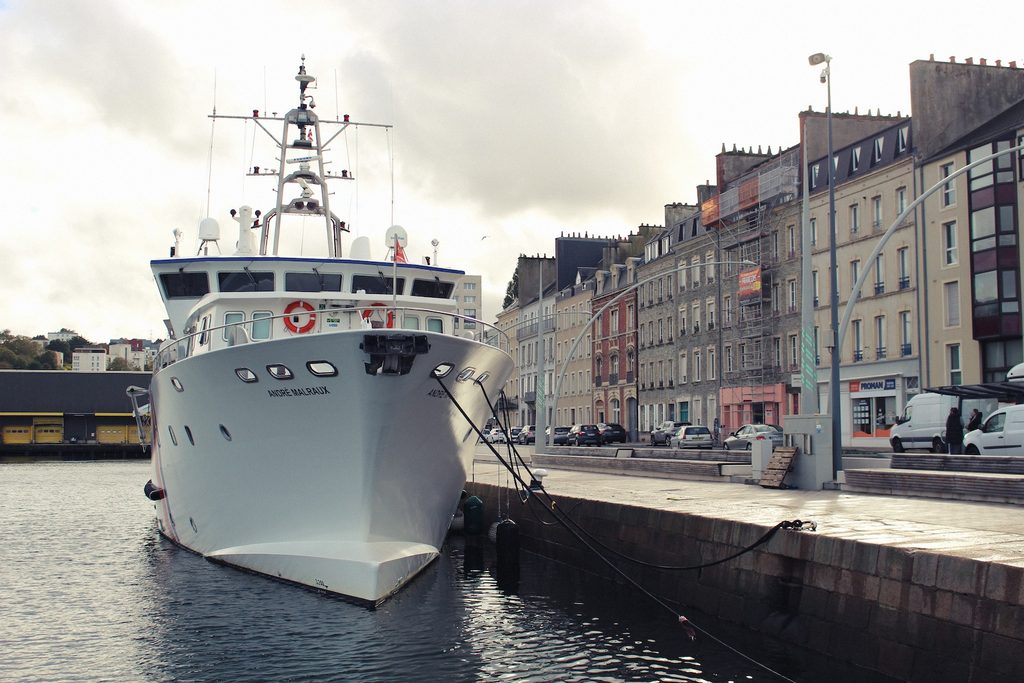
The Bassin du Commerce (Basin of Commerce) is central to Cherbourg’s character as a port city, and is one of its most iconic meeting points. Built over the 18th and 19th centuries, it offered an access point for boats to the city centre. The quays of the marina are a popular spot for a stroll, and are flanked by landmarks such as the Les Eléis shopping mall.
3. Port Chantereyne (Chantereyne Port)
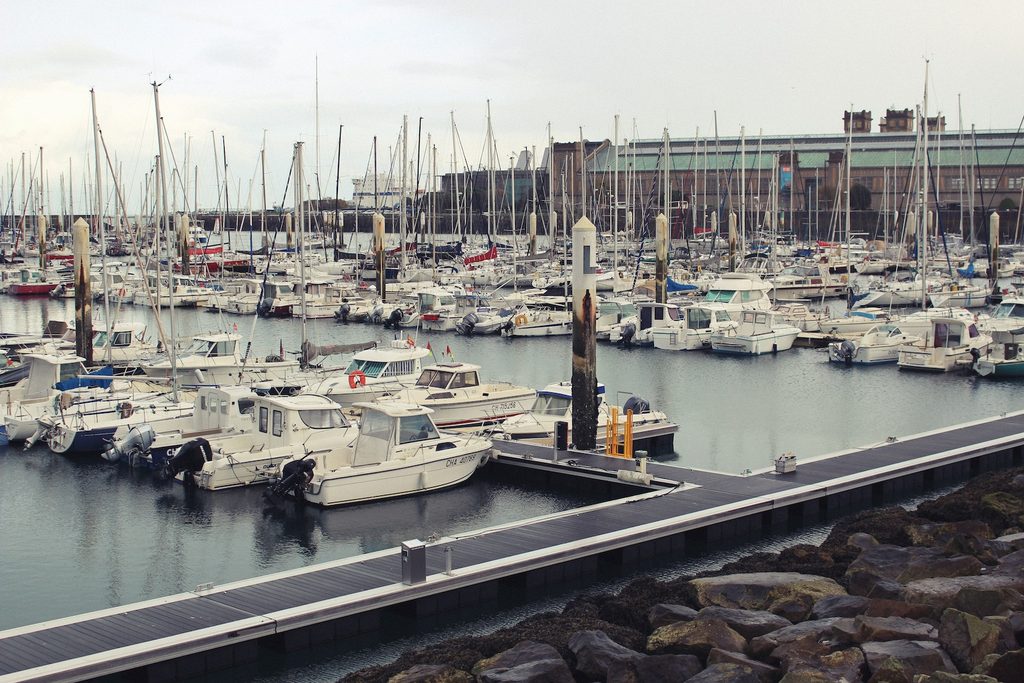
North of Bassin du Commerce (Basin of Commerce), and one step closer to the English Channel, is Port Chantereyne (Chantereyne Port), a newer marina with a capacity of 1,600 berths. Located in Europe’s largest artificial harbour, it is now a major hub for boating and yachting enthusiasts.
4. La Rade de Cherbourg (Cherbourg Harbour)

Cherbourg is home to Europe’s largest artificial harbour and the world’s second largest, located on the northern tip of the Cotentin Peninsula, with the English Channel beyond.
La Rade de Cherbourg (Cherbourg Harbour) is actually made up of two separate harbours—La Petite Rade (The Small Harbour), where you’ll find the Port Chantereyne (Chantereyne Port), and beyond that to the north, La Grande Rade (The Big Harbour), which is massive. You can see the edges of the harbour demarcated by seawalls in the distance.
5. Le Parapluie de Cherbourg Boutique & Manufacture (The Umbrella of Cherbourg Boutique and Factory)

Luxury umbrella brand Le Parapluie de Cherbourg (The Umbrella of Cherbourg) was founded in 1986, inspired by Jacques Tati’s 1964 film Les Parapluies de Cherbourg (The Umbrellas of Cherbourg).
The brand operates multiple boutiques in Cherbourg, but the one at 22 Quai Alexandre III is also home to a workshop where you can witness part of the manufacturing process of these elaborate umbrellas, as well as a little museum with some special editions.
6. Basilique Sainte-Trinité de Cherbourg-en-Cotentin (Saint Trinity Basilica of Cherbourg-en-Cotentin)

This Gothic minor basilica is Cherbourg’s most well-known church, located just across the road from Place Napoléon (Napoleon Square). Founded in 435, the church’s early iteration was destroyed by Vikings, and it was rebuilt in 1063. Look out for the spooky bas-reliefs featuring the Danse Macabre.
7. Parc Emmanuel Liais (Emmanuel Liais Park)
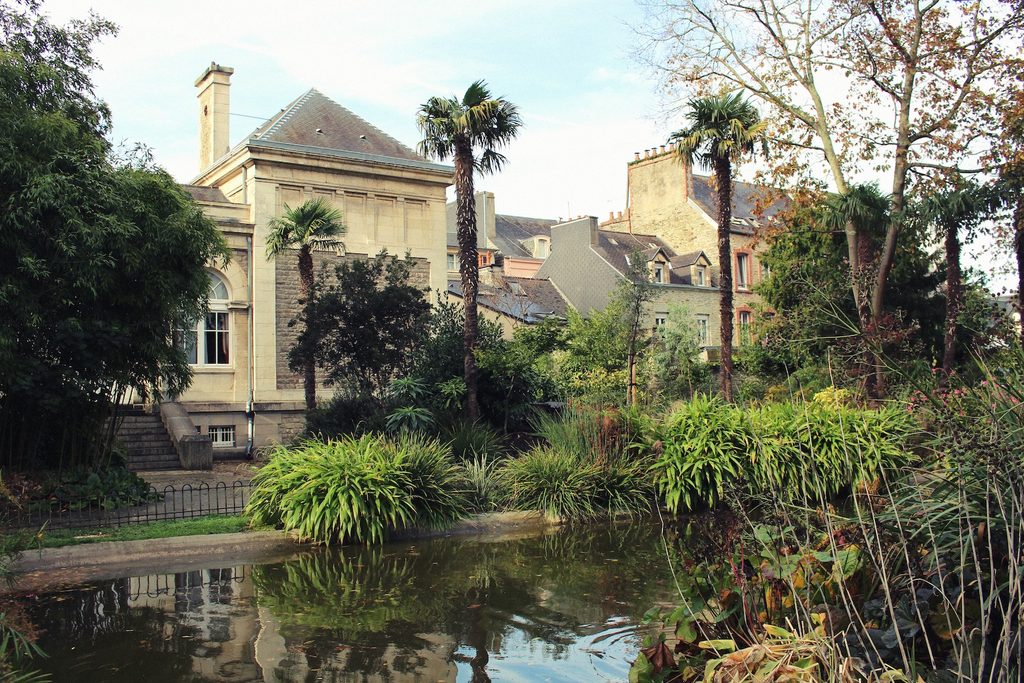
There is lots to do in this sprawling park besides enjoying the green spaces, including visiting greenhouses housing cacti, tropical plants and more, and strolling along winding pathways bordered by exotic plants.
Unfortunately, the Muséum Emmanuel Liais (Emmanuel Liais Museum), which houses a cabinet of curiosities containing specimens and objects from all over the world, is currently under renovation, with no news as to its reopening date.
8. Musée Thomas Henry (Thomas Henry Museum)
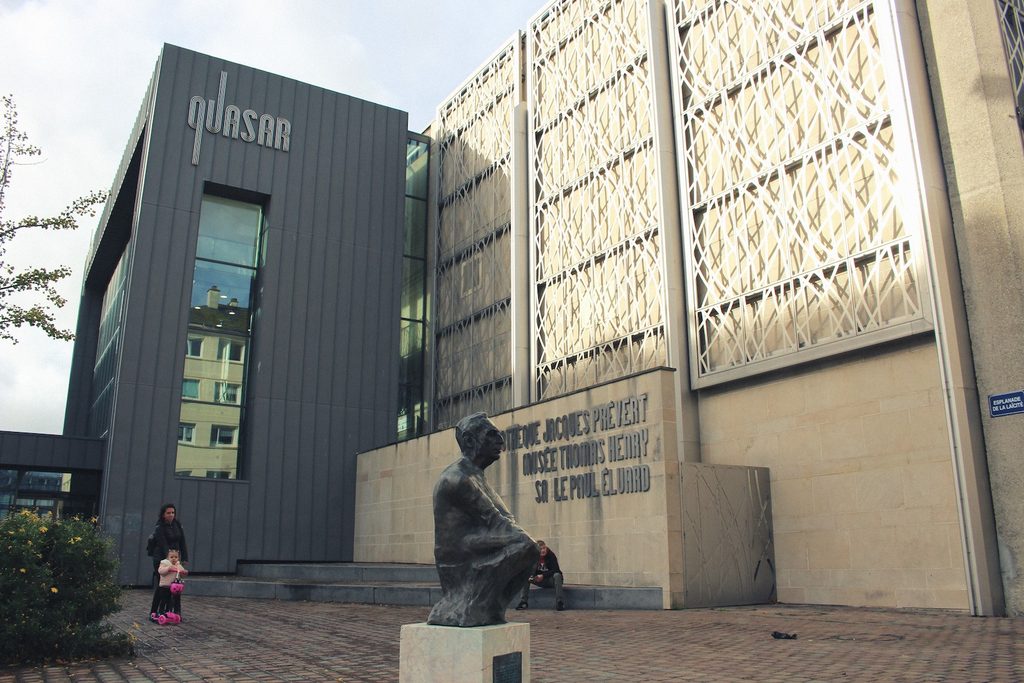
Musée Thomas Henry (Thomas Henry Museum) is Cherbourg-en-Cotentin’s fine arts museum. It contains about 300 works of art, with a large part of its collection dating from the 15th to 19th centuries. It is now considered the third most important fine arts museum in Normandy, and the most important in the department of La Manche.
9. Place Général de Gaulle (General de Gaulle Square)

This stately town square is one of the most famous in Cherbourg. It is home to a fountain and a carousel that operates all year round. On one side of the square, you’ll see Le Trident (The Trident), Cherbourg’s magnificent theatre. The theatre’s Café du Théâtre (Café of the Theatre) has been open since 1882.
10. Place Napoléon (Napoleon Square)

This major square is marked by a giant statue of Napoleon on a horse, with his right hand pointing towards the port. Napoleon was pivotal in the development of the military port of Cherbourg. A local urban legend is that the statue is actually pointing towards England, France’s bitter rival during Napoleon’s reign.
11. Grand magasin Ratti (Ratti Department Store)

This gorgeous art deco building at 1 Rue Maréchal Foch on the corner of Rue Gambetta was built by Maison L Ratti (L Ratti House), which began operations in 1904. The construction of their department store started in 1920. Since then, the commercial space has changed hands many times, but the original façade remains.
12. Rue des Fossés (Street of the Moat)

This narrow lane in the heart of Cherbourg is notable as one of the city’s earliest pedestrian streets. In medieval times, the street ran along the moats of the city’s castle, where stalls were permitted to be set up.
13. Rue du Château (Street of the Castle)

Rue du Château (Street of the Castle) is another important historic street in Cherbourg, named after the medieval castle that was destroyed at the end of the 17th century. It was Cherbourg’s first pedestrian street and is today a major commercial area in the city.
14. Montagne du Roule (Roule Mountain)

The Montagne du Roule (Roule Mountain) is located a stone’s throw from the Cherbourg city centre and is visible from the Bassin du Commerce (Basin of Commerce). There are several tourist destinations located on the mountain, including Musée de la Libération (Liberation Museum) and the Batterie du Roule (Roule Battery).
If you follow the winding street called Montée des Résistances, it will take you up the mountain, where you can enjoy views over the city. The hike to the summit takes about half an hour if you’re reasonably fit.
15. Musée de la Libération (Liberation Museum)

Located at the Fort du Roule (Roule Fort) on the Montagne du Roule (Roule Mountain), the Musée de la Libération (Liberation Museum) enjoys sweeping views over Cherbourg and the English Channel.
The museum is dedicated to the pivotal role the fort played in bringing World War II to an end. Allied forces took control of the fort from the Germans in June 1944, offering access to many of Cherbourg’s strategic assets and strengthening the Allied position.
16. Plage de la Saline (Saline Beach)

Plage de la Saline (Saline Beach) is the nearest beach to the city centre, at about a 40-minute walk from town. This stretch of shoreline is located within La Grande Rade (The Big Harbour), and swimming is prohibited. However, it is a popular place for picnics and is also an area rich in shellfish.
Look out for the monument La Traversée (The Crossing), a stainless steel sculpture symbolising the many transatlantic voyages witnessed by Cherbourg’s harbour.
17. Plage de Collignon (Collignon Beach) and Dunes de Collignon (Collignon Dunes)

As a rainy Norman city, Cherbourg may not be the obvious choice for a beach vacation, but the city is becoming highly sought-after as summers get hotter. Plage de Collignon (Collignon Beach) is supervised in summer and located close to town, making it a popular spot for swimming, sailing and windsurfing.
One of the area’s coolest features is the Dunes de Collignon (Collignon Dunes), rolling landforms covered in greenery located just behind the beach.
18. Plage de Querqueville (Querqueville Beach)

A 35-minute bus ride from town, Plage de Querqueville (Querqueville Beach) is probably Cherbourg-en-Cotentin’s most popular beach. It is supervised in summer and offers a range of amenities, including beach volleyball courts, shower facilities and a children’s playground.
19. Place de la République (Square of the Republic)
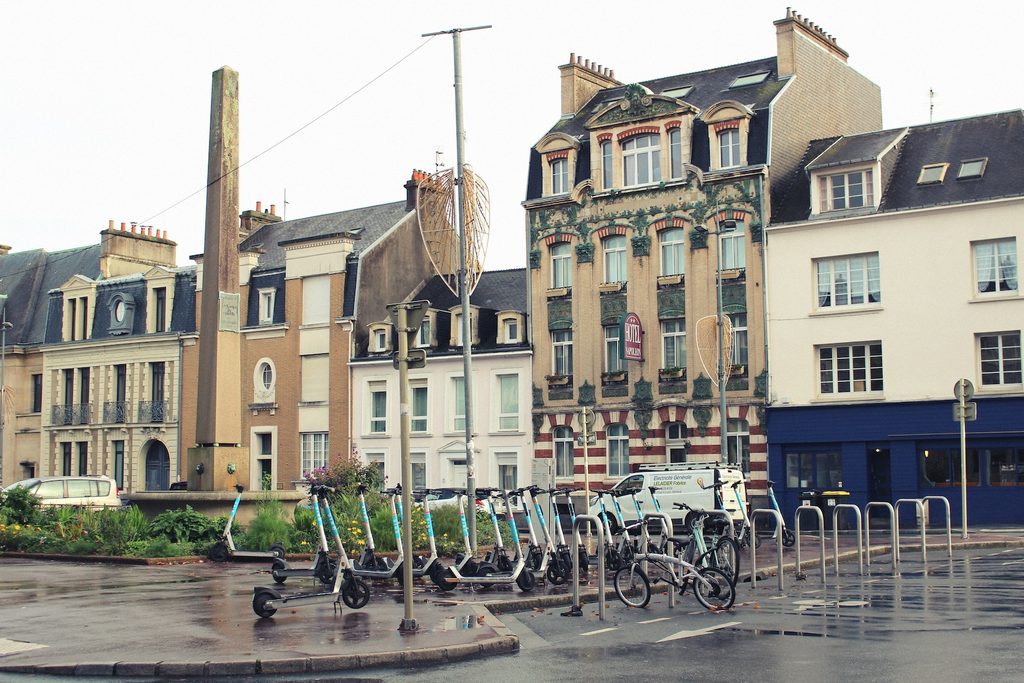
This town square in the city centre of Cherbourg leads to the distinctive Place Napoléon (Napoleon Square). It is recognisable by its obelisk, fountain and memorial to the martyrs of the Resistance in the Cotentin during World War II.
20. Les Eléis

Les Eléis is a contemporary shopping mall overlooking the Bassin du Commerce (Basin of the Commerce). Stores include a Carrefour hypermarket, which can be very useful if you’re looking for a cheap meal or want to put together a picnic. The building was designed to resemble a ship’s hull in a nod to the city’s nautical character.
21. Abbaye du Voeu (Abbey of the Vow)

The medieval ruins of the Abbaye du Voeu (Abbey of the Vow), founded in 1145, are located a short walk from the city centre of Cherbourg. While restoration works were carried out after World War II, for safety and other reasons, the site is usually accessible only via guided tours organised by the Office de Tourisme (Office of Tourism), but you can still admire it from the outside.
22. Batterie du Roule (Roule Battery)
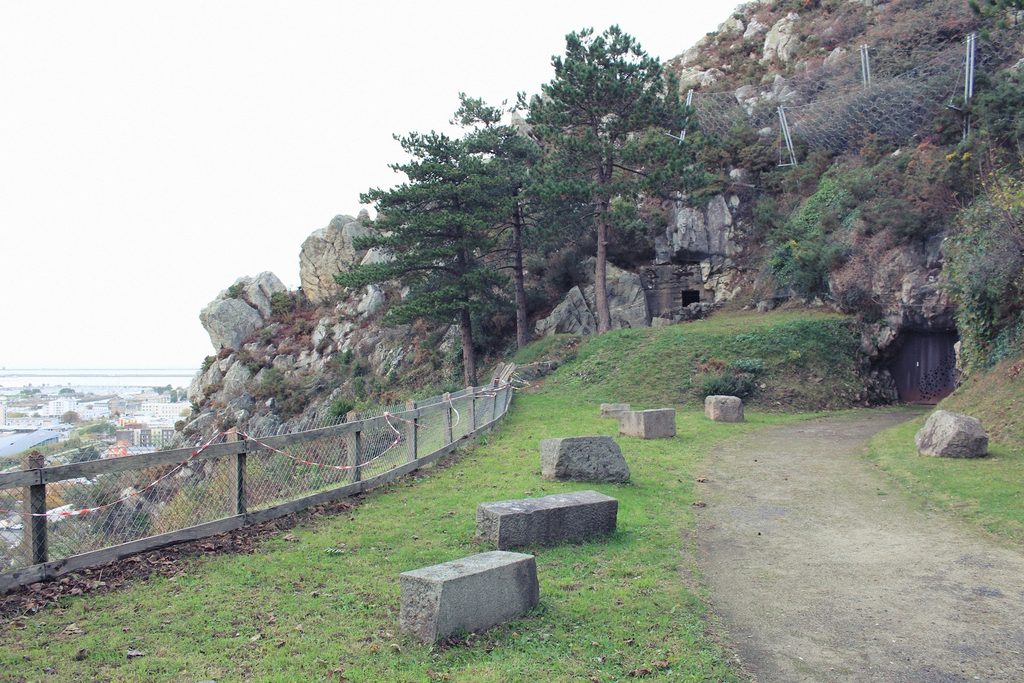
Located on the Montagne du Roule (Roule Mountain), the Batterie du Roule (Roule Battery) consists of around 500 m of tunnels that were dug into the mountains during World War II, mainly to defend the harbour from attack. They can be visited with a guide, with tickets being sold at the entrance.
23. Château des Ravalet (Ravalet Castle)

This castle is accessible by bus from the city centre of Cherbourg in a little over half an hour. It was built on the site of an older medieval castle by Jean II de Ravalet, and marked by the tragic story of his grandchildren Marguerite and Julien de Ravalet, who were beheaded in 1603 for incest and adultery. It changed hands many times until it was acquired by the city of Cherbourg in 1935.
The castle and its grounds are free to visit. The gardens are accessible all year round, while the interior of the castle is open in summer and for guided visits.
24. Musée Connaissance du Cotentin (Knowledge of the Cotentin Museum)

Accessible in about 20 minutes by bus from the Gare de Cherbourg-en-Cotentin (Cherbourg-en-Cotentin Train Station) and housed in a 19th-century farm building, this museum is all about Cotentin heritage. It sheds light on the traditional clothing, tools and objects used in the area in the past, as well as the Manufacture Royale des Glaces à Miroirs (The Royal Factory of Mirrors), where the famous mirrors of the Hall of Mirrors at the Palace of Versailles were made.
25. Jardin public de Cherbourg (Public Garden of Cherbourg)

This pleasant public park at the foot of the Montagne du Roule (Roule Mountain) was built in 1887, and offers a peaceful escape from the city, with a rose garden, a children’s playground and a bandstand where performances are held in summer.
26. Jardin Montebello (Montebello Garden)

It’s easy to miss this pretty little garden, which has an unobtrusive entrance on Rue Montebello, flanked by a little 19th-century-style red brick chalet. Opened in 1872, it was formerly used by a horticultural society before it was opened to the public.
27. Ancien Fort de l’Onglet (Former Fort of the Onglet)

This former fort was set up to protect Cherbourg from attacks from the English, which gives us an idea of how vulnerable Normandy was to English incursions. Today, it is the headquarters of the Cherbourg-Hague Nautical Centre.
Day trips from Cherbourg
- Cherbourg is a gateway to the many stunning natural sights of the Cotentin Peninsula, located in neighbouring municipality La Hague, including the Nez de Jobourg (Nose of Jobourg) and Castel Vendon. You will need a bicycle or vehicle to access most of these sights.
- Picturesque villages Barfleur and Saint-Vaast-la-Hougue are located a short drive or about 70 to 90 minutes away by bus, and make a lovely day trip from Cherbourg.
- Cherbourg is a good base for visits to the D-Day Beaches. You can get to Utah Beach in about 45 minutes and Omaha Beach in an hour by car.

Comments are closed.