
Life has brought me to Brest many times, but I never had the time to explore and honestly didn’t really know what to do in Brest from a visitor’s point of view. For a long time, Brest was just where I went to the prefecture for administrative purposes or helped someone move house.
That is, until last summer, when Gui and I spent an extended period in Brest trying to escape a heatwave that hit most of France except parts of Brittany and Normandy. We even had the chance to spend la Fête de la musique (Musical Day) there, which was so much fun.

That’s when we discovered that there are actually lots of things to do in Brest, and that this port city in Brittany’s Finistère department is actually quite charming and very liveable.
There isn’t much historical architecture in Brest, most of it having been destroyed during World War II. But the proximity of the sea imbues it with a certain beauty, and there is lots to do in town.
Contents:
- Is Brest worth visiting?
- 25 things to see in Brest
- 1 Océanopolis
- 2. Château de Brest (Castle of Brest) and Musée national de la Marine (National Museum of the Navy)
- 3. Les Ateliers des Capucins (The Capuchin Workshops)
- 4. Tour Tanguy (Tanguy Tower)
- 5. Pont de Recouvrance (Recouvrance Bridge)
- 6. Téléphérique de Brest (Brest Cable Car)
- 7. Jardin des Explorateurs (Explorers’ Garden)
- 8. Cours Dajot (Dajot Promenade)
- 9. Rue de Siam (Siam Road)
- 10. Banks of the Penfeld
- 11. Jardin du Conservatoire Botanique National de Brest (Brest National Botanic Conservatory Garden)
- 12. Rue Saint-Malo (Saint Malo Street)
- 13. La PAM
- 14. Naval Monument de Brest (Naval Monument at Brest)
- 15. Port de Commerce (Port of Commerce)
- 16. Le Grand Large (The Open Sea)
- 17. Plage du Moulin Blanc (Beach of the White Mill)
- 18. Port du Moulin Blanc (Port of the White Mill)
- 19. Église Saint-Louis de Brest (Saint Louis Church of Brest)
- 20. Maison de la Fontaine (House of the Fountain)
- 21. Bâtiment aux lions (Lion Building)
- 22. Passerelle, centre d’art contemporain (Walkway, Centre of Contemporary Art)
- 23. Librairie Dialogues (Dialogues Bookshop)
- 24. Le Chantier du Guip (The Guip Shipyard)
- 25. La Piscine (The Swimming Pool)
- Day trips from Brest
Is Brest worth visiting?
- Proximity to the sea – The Atlantic Ocean is ever-present in Brest and can even be seen from the city centre. The beach is just a short bus ride away.
- Important port city – Brest is home to France’s second biggest military naval base, and is also a major city for marine research and technology, which gives the city an interesting and rather industrial character.
- Mild summers – Brest and Brittany in general are becoming sought-after holiday destinations as they tend to experience milder summers than much of France, which is ideal for those who can’t tolerate the heat.
25 things to see in Brest
I’ve tried to order this list of things to do in Brest in order of importance to the visitor. However, please customise your visit according to your own interests! If you are only in Brest for one or two days, visiting the top ten sights on the list will give you a good overview of what Brest has to offer.
1. Océanopolis

Océanopolis is Brest’s most well-known tourist attraction, and is popular with adults and children alike. It is an aquarium, ocean discovery park and marine science centre. The park is equipped with about 50 aquariums housing numerous species of fish, and also has an educational focus, with informative signage in French and English.
The park is divided into several sections, with a pavilion dedicated to marine ecosystems in Brittany, a pavilion housing tropical coral reef ecosystems and a pavilion dedicated to the polar region.
2. Château de Brest (Castle of Brest) and Musée national de la Marine (National Museum of the Navy)

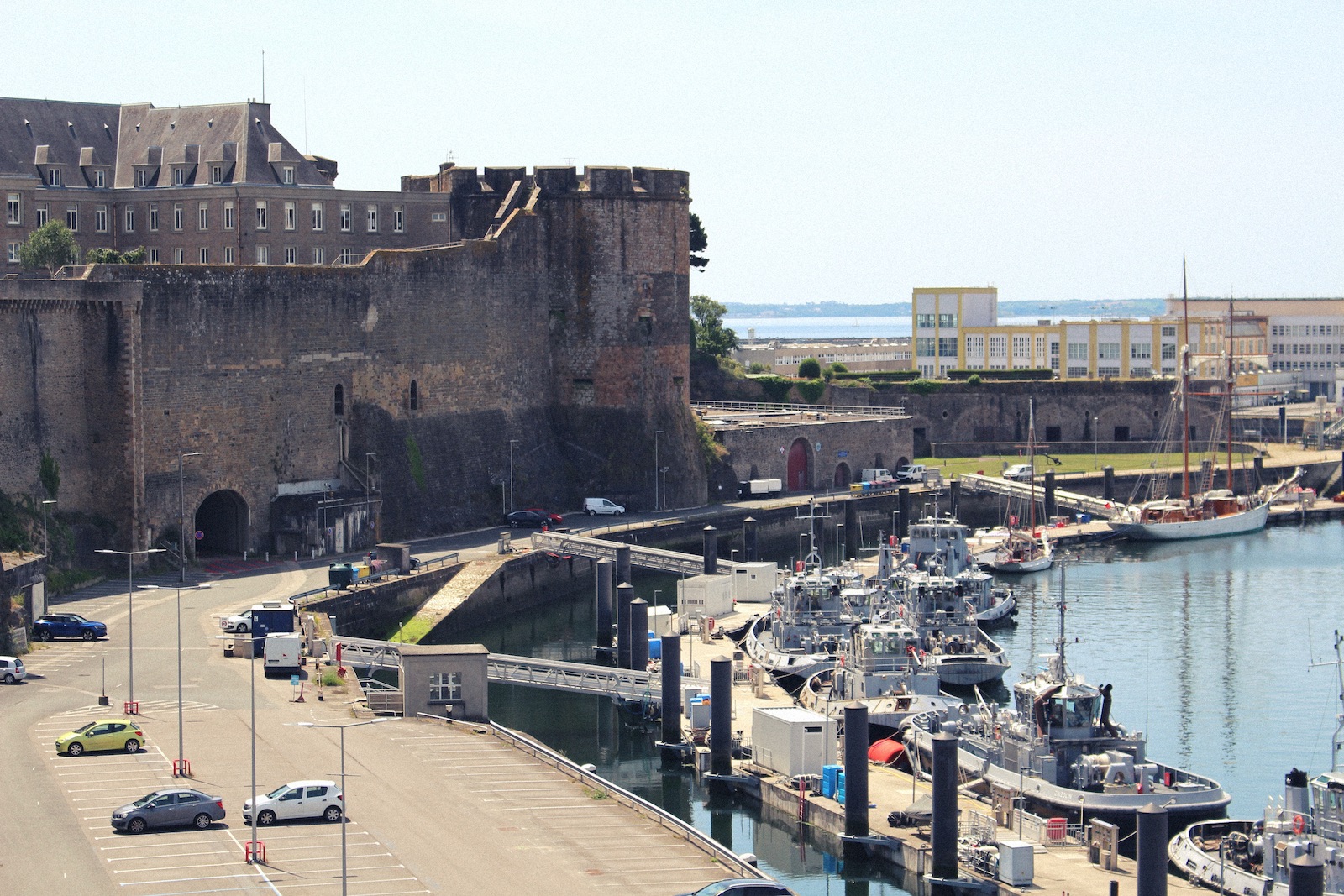
The magnificent Château de Brest (Castle of Brest) is the city’s oldest monument, strategically positioned to overlook the sea and the mouth of the Penfeld River.
Construction on the castle’s foundations began as early as the third century, when Brest was under Roman rule as part of Armorica, and it eventually grew to become an impressive military fortress. In the 13th century, the castle fell into the hands of the Dukes of Brittany.
Today, the castle is home to the Musée national de la Marine (National Museum of the Navy), which sheds light on the history of the navy in France and features exhibits of ships, navigation instruments and more. The entry ticket offers access to the castle’s towers and ramparts, as well as the museum. Check their opening hours to be safe.
3. Les Ateliers des Capucins (The Capuchin Workshops)

This huge indoor public square was repurposed from an old industrial hall and now comprises a cultural and commercial space that has retained its industrial character in a cool way.
A big part of the space is open to the public for free without the need to consume anything, so you’ll see people working on their laptops, picnicking, practising their dance moves or just hanging out.
Les Ateliers des Capucins (The Capuchin Workshops) is home to the Médiathèque François Mitterand (François Mitterand Multimedia Library), a cinema, shops, restaurants and more.
You’ll also find the 70.8 – Musée pour l’océan à Brest (Museum for the Ocean in Brest), which examines the importance of our oceans from the perspective of science, navigation and strategy. You can check their opening hours and book tickets online.
4. Tour Tanguy (Tanguy Tower)

Tour Tanguy (Tanguy Tower) is a highly recognisable landmark on the banks of the Penfeld, and also houses a small museum that is free to visit. The museum contains a series of dioramas reenacting the history of Brest.
The tower is a remnant of the Bastille de Quilbignon (Quilbignon Fortress), built in the 14th century to defend Brest from the invading English who had taken control of the nearby Château de Brest (Castle of Brest).
5. Pont de Recouvrance (Recouvrance Bridge)

This imposing bridge stretches across the river Penfeld and was, following its opening in 1954 and until 2008, Europe’s biggest vertical-lift bridge. It replaces an earlier bridge that was destroyed in World War II. Today, it is a major landmark in Brest, connecting the major thoroughfare Rue de Siam in the modern city centre to the historic Recouvrance neighbourhood.
6. Téléphérique de Brest (Brest Cable Car)

Brest’s cable car is part of its public transport network, and connects the area around Rue de Siam (Siam Street) to the Capucins neighbourhood on the other side of the Penfeld.
The cost of a ride on the cable car is the same as a normal Bibus bus or tram ride and is valid for one hour on the entire public transport network. However, if you plan to make a round-trip on the cable car, it might be cheaper to purchase a cable car-only return ticket.
7. Jardin des Explorateurs (Explorers’ Garden)

This lovely garden is dedicated to the many 18th-century explorers who set sail from Brest, and is home to a collection of plants from all over the world. But the park’s biggest draw is surely its stunning views over the harbour.
8. Cours Dajot (Dajot Promenade)

This long, tree-lined avenue is one of the most popular places in Brest for a stroll. Elevated above the port and harbour, it offers beautiful views of maritime Brest. Look out for the sumptuous 1900 house Villa Croisnier at 20 Rue de Denver, which you can see from Cours Dajot (Dajot Promenade).
9. Rue de Siam (Siam Road)

This road is one of the most important thoroughfares running through the city centre, and is today Brest’s commercial heart, with a tram line running through it and a plethora of shops and restaurants on both sides.
The road gets its name from three ambassadors from Siam (present-day Thailand) who disembarked in Brest in the 17th century on the way to Versailles, where they had come to see Louis XIV. Legend has it that they walked down the street barefoot to get to their hotel, which inspired the locals to rename the road.
10. Banks of the Penfeld
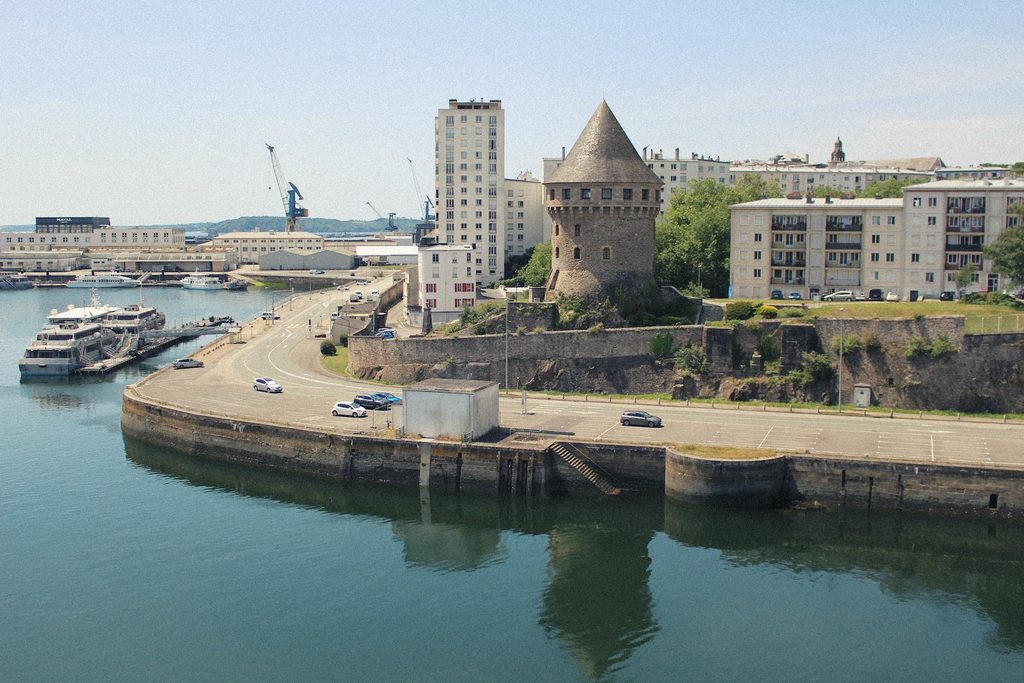
The Penfeld runs through Brest from north to south, and is a scenic spot for a stroll along the waterfront. Towards the south, the banks of the Penfeld are home to such landmarks as the Château de Brest (Castle of Brest) and Tour Tanguy (Tanguy Tower). As you move north, the river takes you out of the city and into nature.
11. Jardin du Conservatoire Botanique National de Brest (Brest National Botanic Conservatory Garden)

This botanic garden feels massive, surrounded as it is in some parts by towering trees and a sprawling lake. A stroll here feels more like a hike in nature than a walk in the park. Entry to the park is free, and you can also visit the greenhouses at certain times of year for a fee. To the south, it leads to the Plage du Moulin Blanc (Beach of the White Mill).
12. Rue Saint-Malo (Saint Malo Street)
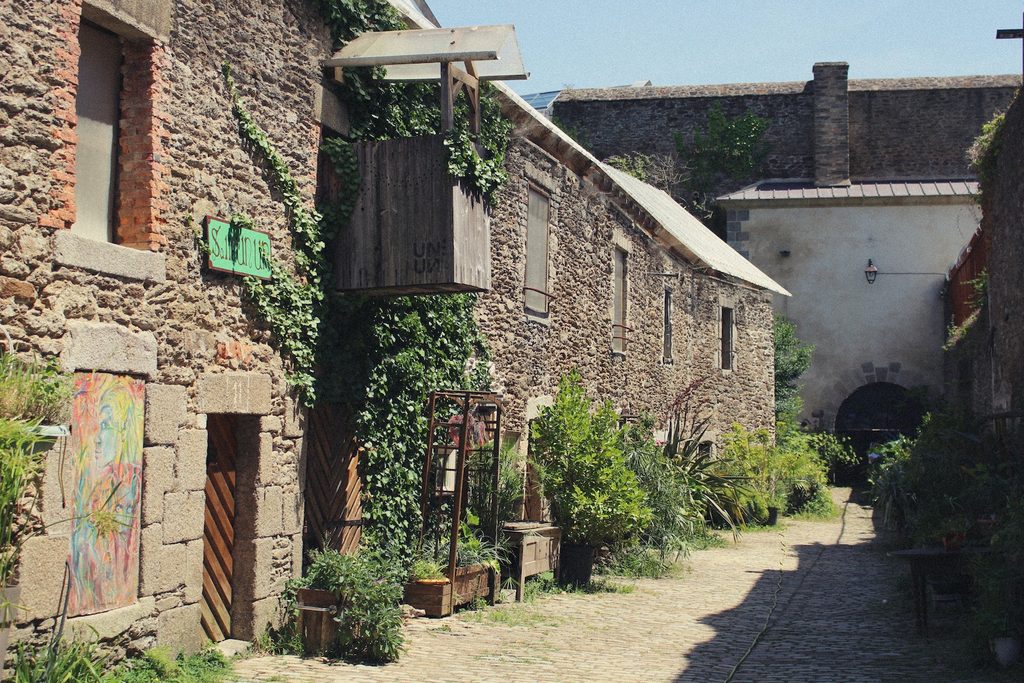
Rue Saint-Malo (Saint Malo Street) is Brest’s best-kept secret and one of my favourite places in the city! Located on low-lying land, it is the city’s oldest street and is populated with 17th-century Breton houses. Formerly part of a working-class neighbourhood, the street now holds frequent concerts and other cultural events. Keep your eyes open as you explore the street, as there are some hidden spots, such as a little garden and a tiny exhibition space.
13. La PAM
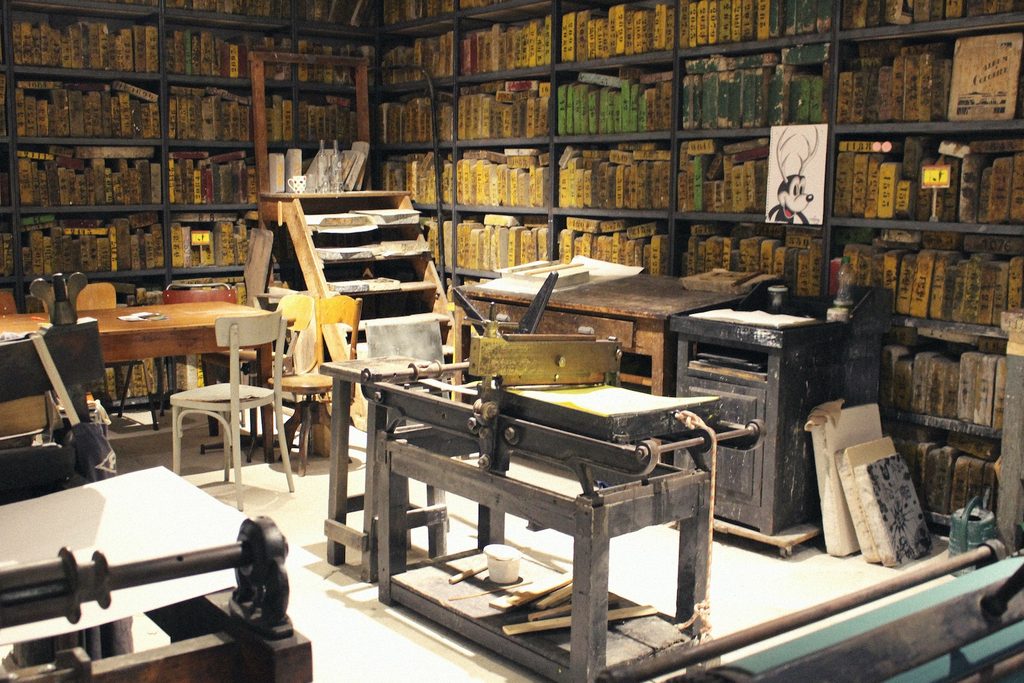
La PAM, a building formerly housing Brest’s printing facility, has been transformed into a space that now includes eateries, an event space and the Musée vivant de l’imprimerie (Living Museum of Printing) (pictured), which is free to visit. Check out their calendar to find free concerts, activities and events all year round.
14. Naval Monument de Brest (Naval Monument at Brest)

Also known as the Monument Américain (American Monument) or the Tour rose (Pink Tower), the Naval Monument de Brest (Naval Monument at Brest) is an American memorial that towers over the city on Cours Dajot (Dajot Promenade). Built in commemoration of the intervention of the American Navy during World War I, it has become an iconic landmark in Brest.
15. Port de Commerce (Port of Commerce)

From a small-scale port in the 17th century, Brest’s Port de Commerce (Port of Commerce) was expanded to serve as a military port. Today, it is home to a mixture of commercial and pleasure boats along Quai de la Douane. It is also a popular entertainment district, with restaurants and bars lining the waterfront.
16. Le Grand Large (The Open Sea)

A massive mural, titled Le Lamaneur, adorns the building known as Le Grand Large (The Open Sea), located at the Port de Commerce (Port of Commerce) along Quai de la Douane. Created by artist Paul Blaos, it depicts a port worker at work, and has come to symbolise the spirit of the commercial port.
17. Plage du Moulin Blanc (Beach of the White Mill)

One of Brest’s biggest selling points is that you never have to travel far to reach the sea. The city’s local beach is called Plage du Moulin Blanc (Beach of the White Mill), and can be easily reached by bus from the city centre. It is very popular in summer, thanks to its long, sandy beach and calm waters.
18. Port du Moulin Blanc (Port of the White Mill)

The marina, located within walking distance from the western end of the Plage du Moulin Blanc (Beach of the White Mill), is a popular area for a cocktail and to enjoy Brest’s maritime atmosphere.
19. Église Saint-Louis de Brest (Saint Louis Church of Brest)
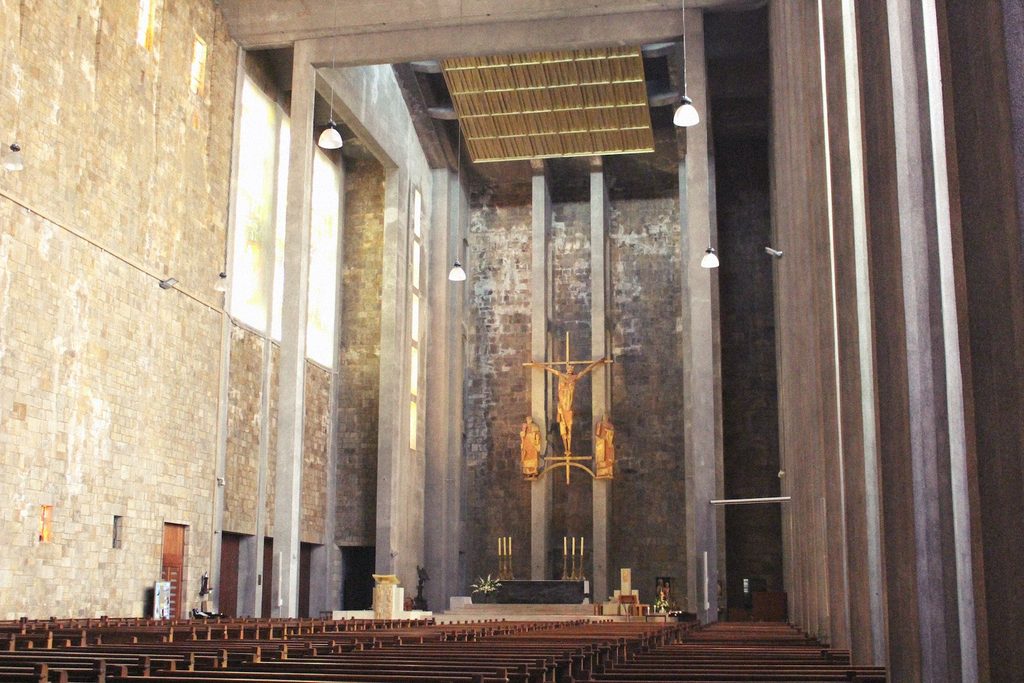
This is Brest’s best-known church. Built on the ruins of an older church that was destroyed during World War II, it is the biggest French church rebuilt during the postwar years. The controversial building draws inspiration from modern Swiss German churches. The red doors are a reference to blood spilled during the war, and their shape was inspired by submarine doors in a nod to Brest’s maritime character.
20. Maison de la Fontaine (House of the Fountain)

This early 18th-century house at the foot of the Jardin des Explorateurs (Explorers’ Garden) is one of the rare historic buildings still standing in the city centre of Brest, recognisable by the fountain built into its façade. Originally built for the chaplain of a cemetery, today, it is home to an art exhibition space. It is free to visit, but you should check opening hours to avoid disappointment.
21. Bâtiment aux lions (Lion Building)

This building, constructed in the early 19th century, is adorned with the heads of lions made of lead. It was built for the navy, notably for the storage of materials for naval repairs. Symbolically, it marked a separation between military Brest and civil Brest, with the Penfeld on one side and the residential Rue Saint-Malo (Saint Malo Street) on the other.
22. Passerelle, centre d’art contemporain (Walkway, Centre of Contemporary Art)

This contemporary art centre is free to visit and holds frequent temporary exhibitions on a variety of artistic themes, as well as concerts and other events.
23. Librairie Dialogues (Dialogues Bookshop)

This independent bookshop on Rue de Siam has two separate stores, each located a short walk from the other—a beautiful, two-storey main shop on Parvis Marie-Paul Kermarec filled with natural light, and a smaller shop dedicated to Japanese manga at 52 Rue de Siam. It’s a local institution and a must-visit for bibliophiles.
24. Chantier du Guip (Guip Shipyard)

While there are several shipyards in Brest, the Chantier du Guip (Guip Shipyard) is special, as it specialises in the restoration and construction of traditional wooden boats. Guided tours can be organised via Brest’s office de tourisme (tourism office). If not, you might be able to spot the hull of a boat they’re working on from the outside.
25. La Piscine (The Swimming Pool)

This art centre has its own contemporary art museum, and also functions as a meeting place for artists. It is free to visit, but you should check their opening hours first.
Day trips from Brest
- Brest is a great base from which to explore the Presqu’île de Crozon (Crozon Peninsula), one of the most beautiful natural sites in Brittany.
- Landerneau is a charming commune located just 15 minutes by train from Brest, and makes for an easy day trip.
- Brest is easily accessible by train and bus from Quimper, the third-largest city in Brittany, and by car from beautiful Breton village Locronan.
- If you have access to a car, you can easily visit la Pointe du Raz (the Raz Point) from Brest, home to some of the most dramatic coastal landscapes in France.

Comments are closed.