

Metz is one of the biggest cities in the Grand Est region in the east of France, after Strasbourg and Reims.
Having lived in much bigger French cities myself, I was expecting it to be fairly modest in size. Gui, who went to university in Metz, warned me that there were actually a huge number of things to do in Metz.
On my first visit, I discovered that the city does indeed punch far above its weight, and there are a mind-boggling number of places to visit in Metz. I would recommend staying a minimum of three days if you want to get a good feel of what Metz has to offer.

Metz was annexed to the German Empire from 1871 to 1918 after the Franco-Prussian War. This gave rise to a large amount of German-style architecture, which today sits alongside older Lorraine architecture.
As the prefecture of the Moselle department in the Grand Est region, Metz is culturally part of the historical area of Lorraine. Yes, that’s the same Lorraine where quiche Lorraine is from. Wondering what to do in Metz besides eat? Read on to find out!
Contents:
- Is Metz worth visiting?
- 65 places to visit in Metz
- 1. Cathédrale Saint-Étienne de Metz (Metz Cathedral)
- 2. Centre Pompidou-Metz
- 3. Musée de la Cour d’Or (Museum of Metz)
- 4. Porte des Allemands (Germans’ Gate)
- 5. Place d’Armes (Square of Arms)
- 6. Place de la Comédie (Theatre Square)
- 7. Temple Neuf (New Temple) and Jardin d’Amour (Garden of Love)
- 8. Basilique Saint-Pierre-aux-Nonnains (Basilica of Saint-Pierre-aux-Nonnains)
- 9. Place Saint-Louis (Saint Louis Square)
- 10. Banks of the Moselle
- 11. Moyen Pont des Morts (Medium Bridge of the Dead) and Grand Pont des Morts (Big Bridge of the Dead)
- 12. Place de Chambre (Chamber Square)
- 13. Rue Taison (Taison Street)
- 14. Plan d’eau de Metz (Metz Lake)
- 15. Marché Couvert (Covered Market)
- 16. Gare de Metz-Ville (Metz-Ville Station)
- 17. Jardin de l’Esplanade (Garden of the Esplanade)
- 18. Arsenal Jean-Marie Rausch (Jean-Marie Rausch Arsenal)
- 19. Porte Serpenoise (Serpenoise Gate)
- 20. Basilique Saint-Vincent de Metz (Saint Vincent Basilica of Metz)
- 21. Église Sainte-Ségolène (Saint Ségolène Church)
- 22. La Maison des Têtes (The House of Heads)
- 23. Île du Saulcy (Saulcy Island)
- 24. Place de la République (Square of the Republic)
- 25. Banks of the Seille
- 26. Maison Heler Metz
- 27. Avenue Foch (Foch Avenue)
- 28. Palais de Justice (Law Courts)
- 29. Hôtel des Postes de Metz (Hotel of the Post Offices of Metz)
- 30. Rue Serpenoise (Serpenoise Road)
- 31. Cloître des Récollets (Cloister of the Récollets)
- 32. Chapelle des Templiers de Metz (Chapel of the Templars of Metz)
- 33. Église Notre-Dame-de-l’Assomption (Notre Dame de l’Assomption Church)
- 34. FRAC Lorraine
- 35. Maison de Rabelais (Rabelais House) and Chapelle Saint-Genest (Saint Genest Chapel)
- 36. Jardins Jean-Marie Pelt (Jean-Marie Pelt Gardens) and Tremblement de Ciel (Trembling of the Sky)
- 37. Jardin Botanique de Metz (Metz Botanic Garden)
- 38. Place Sainte-Croix (Saint Croix Square)
- 39. Hôtel Saint-Livier (Saint Livier Hotel)
- 40. Place Saint-Jacques (Saint Jacques Square)
- 41. Jardin des Tanneurs (Garden of the Tanners)
- 42. Jardin Boufflers (Boufflers Garden)
- 43. Palais du Gouverneur Militaire (Palace of the Military Governor)
- 44. Église Saint-Maximin (Saint Maximin Church)
- 45. Église Saint-Martin (Saint Martin Church)
- 46. Église Saint-Clément (Saint Clément Church)
- 47. Église Saint-Eucaire (Saint Eucaire Church)
- 48. Église Saint-Simon-et-Saint-Jude (Saint Simon and Saint Jude Church)
- 49. Église Sainte-Thérèse-de-l’Enfant-Jésus (Church of Saint Thérèse of the Infant Jesus)
- 50. Tour du Temple de la Garnison de Metz (Tower of the Temple of the Garrison of Metz)
- 51. Fort de Bellecroix (Bellecroix Fort)
- 52. Fort Queuleu (Queuleu Fort)
- 53. Boulevard Paixhans (Paixhans Boulevard)
- 54. Canal de la Moselle (Canal of the Moselle)
- 55. Square du Luxembourg (Luxembourg Square)
- 56. Place Raymond Mondon (Raymond Mondon Square)
- 57. Tour Camoufle (Camoufle Tower)
- 58. Château d’eau (water tower)
- 59. Grenier de Chèvremont (Chèvremont Granary)
- 60. Hôtel de Heu (Heu Hôtel)
- 61. Hôtel de Burtaigne (Burtaigne Hotel)
- 62. Abbaye Saint-Arnould (Saint Arnould Abbey)
- 63. Maison natale de Verlaine (Birthplace of Verlaine)
- 64. Synagogue de Metz (Metz Synagogue)
- 65. Muse
- Day trips from Metz
Is Metz worth visiting?
- Rich in historical and cultural sights – Metz is home to an impressive roster of places to visit, including world-renowned sights such as the famous Cathédrale Saint-Étienne de Metz (Metz Cathedral) and the Centre Pompidou-Metz.
- Free museums – The extensive Musée de la Cour d’Or (Museum of Metz), which is divided into four sections, is free to visit, as is the FRAC Lorraine on weekends.
- Potential future UNESCO World Heritage Site – The historic city centre of Metz and the area around the Gare de Metz-Ville (Metz-Ville Station) are on the UNESCO World Heritage Tentative List.
- Excellent connectivity – Metz enjoys quick connections by train to other major cities such as Nancy, Strasbourg and Reims, and is also easily reachable from Paris.
65 places to visit in Metz
I’ve tried to order this list of things to do in Metz in order of importance, but of course, feel free to build your own itinerary based on your own interests. If you just have one or two days in Metz, the top 15 sights on the list cover the must-sees. Let’s get into it!
1. Cathédrale Saint-Étienne de Metz (Metz Cathedral)

The Cathédrale Saint-Étienne de Metz (Metz Cathedral) is one of the most famous churches in France. It contains the world’s largest expanse of stained glass, covering a surface of about 6,496 m2 (69,920 sq ft) and earning it the nickname La Lanterne du Bon Dieu (The Lantern of God).
The most famous stained glass windows in the cathedral are arguably those created by Marc Chagall between 1962 and 1969.
Its nave (the central part of the church stretching to the altar) is also the third-highest Gothic nave in France, which means the distance from the floor to the highest point of the ceiling will make your head spin.
Construction on the Rayonnant Gothic building began in about 1220 on the site of a previous cathedral. The cathedral is built from Jaumont limestone, which gives it its warm, golden colour.
2. Centre Pompidou-Metz

There are two Centre Pompidou museums in France, but the Paris museum is closed for renovations until 2030. As luck would have it, the other Centre Pompidou is in Metz!
The striking building of the Centre Pompidou-Metz, designed by Shigeru Ban and Jean de Gastines and inaugurated in 2010, is an attraction in its own right. Its undulating roof was inspired by a traditional Chinese hat made of woven bamboo that Shigeru Ban bought in Paris.
The museum has a huge collection of 20th– and 21st-century art, and also organises about three or four temporary exhibitions every year.
3. Musée de la Cour d’Or (Museum of Metz)

The Musée de la Cour d’Or (Museum of Metz) is actually made up of four sections that are practically individual museums in themselves: the Gallo-Roman, medieval, fine arts and biodiversity sections. The entire museum is free to visit, so make sure to budget enough time to visit all four sections.
The Gallo-Roman section contains archeological artefacts dating back to when Gaul, which covered much of present-day France, was ruled by the Romans from roughly 50 BC to AD 400. The highlight is the recreation of a second-century thermal complex.
The medieval section is home to objects and artwork from the Middle Ages, while the fine arts section has a collection of artwork dating from the 16th century to the end of the 20th century. And finally, the biodiversity section exhibits a collection of animal and plant specimens.
4. Porte des Allemands (Germans’ Gate)

The Porte des Allemands (Germans’ Gate) dates back to the medieval period and marks the old entry point to the historic city of Metz. It was built in the 13th century and is today the most important remnant of the city’s fortifications. Notice how the gate has towers integrated into it for extra fortification.
5. Place d’Armes (Square of Arms)

The sprawling, rectangular Place d’Armes (Square of Arms) is home to the Cathédrale Saint-Étienne de Metz (Metz Cathedral) and the Hôtel de Ville (Town Hall). Commissioned by Louis XV in the 18th century, it was intended to be a focal point for the institutions of power and military might.
6. Place de la Comédie (Theatre Square)

Place de la Comédie (Theatre Square) is one of the most recognisable squares in Metz thanks to its location on the banks of the Moselle and on Île du Petit Saulcy (Little Saulcy Island). It is home to the Opéra-Théâtre de Metz (Metz Opera), France’s oldest opera house still in operation.
7. Temple Neuf (New Temple) and Jardin d’Amour (Garden of Love)

You can’t miss the Temple Neuf (New Temple), also known as the nouveau temple protestant (New Protestant Temple), thanks to its location overlooking the Moselle on the Île du Petit Saulcy (Little Saulcy Island).
Built between 1901 and 1905 when Metz and northeastern Lorraine were annexed to the German Empire, the style of the Temple Neuf (New Temple) reflects German influence, as it was built in a Neo-Romanesque style common in the German Empire at the time.
Don’t forget to take a stroll in the Jardin d’Amour (Garden of Love) on the grounds of the Temple Neuf (New Temple), a romantic spot from which to admire the Moselle River and the Opéra-Théâtre de Metz (Metz Opera).
8. Basilique Saint-Pierre-aux-Nonnains (Basilica of Saint-Pierre-aux-Nonnains)

This basilica is one of Europe’s oldest churches, with the building dating back to the 4th century. The Gallo-Roman structure was formally part of a thermal complex and a civil basilica, used for various public functions, before becoming a church in the seventh century.
9. Place Saint-Louis (Saint Louis Square)

This huge square is one of the most iconic in Metz and has retained much of its medieval character, including the gallery of arcades that today houses lots of bars and, in winter, a Christmas market.
Many of the buildings flanking the square were refurbished in the 18th century, but some have retained medieval features, such as the ribbed appearance of the top edge of some façades and protruding balconies.
10. Banks of the Moselle

Much of the action in Metz takes place on the banks of the Moselle, from which you can see many of the city’s iconic sights, including the Temple Neuf (New Temple) and Place de la Comédie (Theatre Square).
11. Moyen Pont des Morts (Medium Bridge of the Dead) and Grand Pont des Morts (Big Bridge of the Dead)
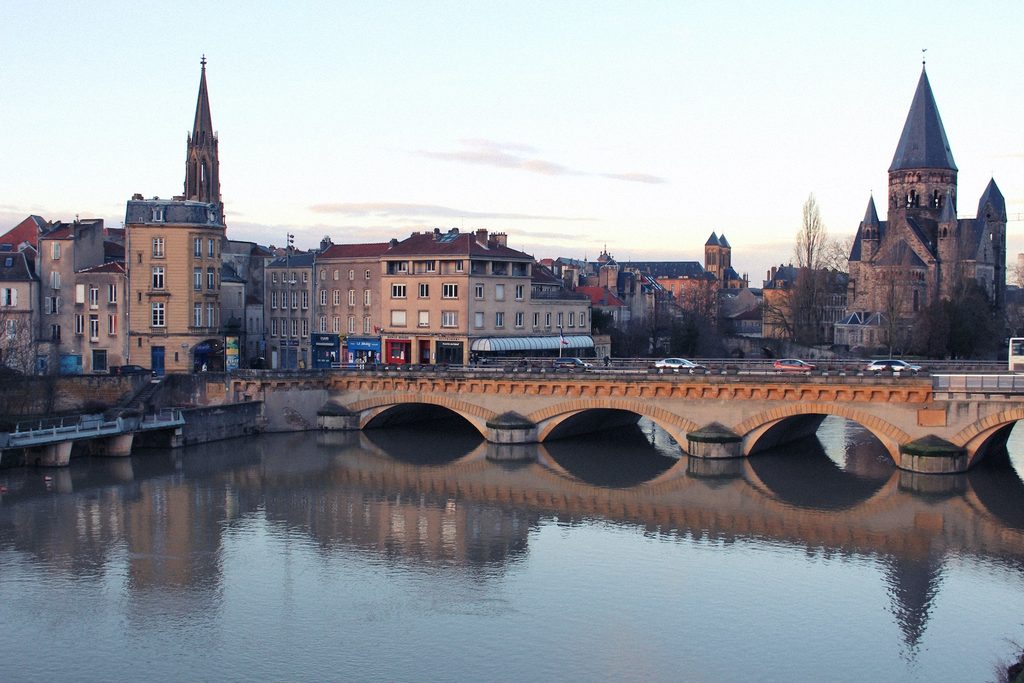
The Moyen Pont des Morts (Medium Bridge of the Dead) (pictured), more commonly known as the Moyen Pont (Medium Bridge), is a key meeting point in town as it overlooks the Temple Neuf (New Temple) and connects Île du Petit-Saulcy (Little Saulcy Island) to the mainland.
If you follow the bridge in a straight line across the Île du Petit-Saulcy (Little Saulcy Island), you’ll find yourself at the Grand Pont des Morts (Big Bridge of the Dead), also known simply as the Pont des Morts (Bridge of the Dead). The two bridges were built in a straight line in the 13th and 14th centuries, with the Moyen Pont (Medium Bridge) being older.
12. Place de Chambre (Chamber Square)

This square at the base of the Cathédrale Saint-Étienne de Metz (Metz Cathedral) is known for its beauty. It is one of Metz’s oldest squares, dating back to the 10th century, and its shape has remained largely unchanged. It gets its name from the private chambers set up in the area for members of the clergy connected to the nearby cathedral.
13. Rue Taison (Taison Street)

You’ll recognise Rue Taison (Taison Street) by the dragon dangling overhead. Legend has it that Le Graoully, a dragon, once terrorised the inhabitants of the area. To avoid waking the monster or attracting its attention, the inhabitants were instructed to “Taisons-nous (let’s be quiet)”, which gives the street its name.
Today, it is a popular place to check out independent boutiques, grab a coffee or admire the many historic buildings lining the street.
14. Plan d’eau de Metz (Metz Lake)

The Plan d’eau de Metz (Metz Lake) is an artificial lake, built in the 1970s, that is now one of the most popular places to hang out in summer. Honestly, I think it is well worth a visit in any season as it is very scenic.
One of the most iconic sights is the lake’s Japanese torii gate rising out of the water, inspired by the Itsukushima Shrine on Miyajima Island in Japan.
15. Marché Couvert (Covered Market)

Metz’s local Marché Couvert (Covered Market) is located a stone’s throw from the Cathédrale Saint-Étienne de Metz (Metz Cathedral), and is one of the best places in Metz to grab an affordable bite, sample regional specialties and shop for food products to bring home. The indoor food hall and market has been in operation since the early 19th century.
16. Gare de Metz-Ville (Metz-Ville Station)

Gare de Metz (Metz-Ville Station) is Metz’s main train station, and also a historic monument and tourist attraction in its own right. Don’t forget to visit the interior of the station, which was built to evoke the power of the German Empire.
The station and the district surrounding it, also called the Imperial District, were built when Metz was annexed to the German Empire for the first time, as the Germans wanted to Germanise the city.
The huge station, built in the Neo-Romanesque style popular in the German Empire at the time, was strategically designed to be able to transport troops to Russia, which accounts for its massive size today.
17. Jardin de l’Esplanade (Garden of the Esplanade)

This stately French garden is surrounded by numerous notable buildings, including the Palais de Justice (Law Court) and concert hall Arsenal Jean-Marie Rausch (Jean-Marie Rausch Arsenal). Dating back to the 19th century, the garden was built on the site of the moats of a former citadel.
18. Arsenal Jean-Marie Rausch (Jean-Marie Rausch Arsenal)
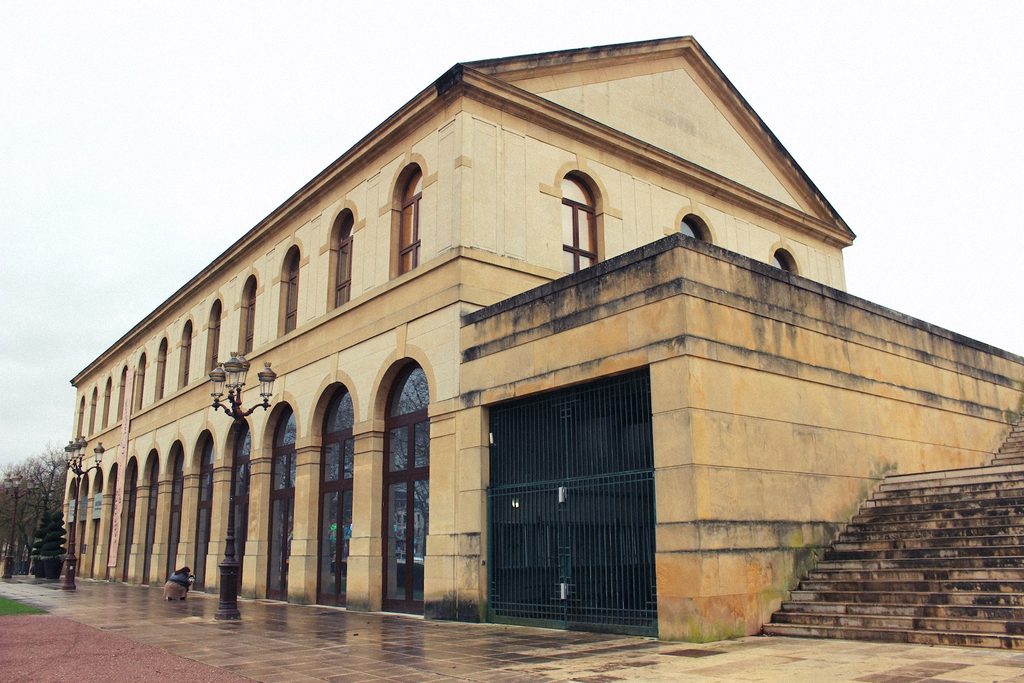
Arsenal Jean-Marie Rausch (Jean-Marie Rausch Arsenal), also known as Arsenal Ney (Ney Arsenal), is a concert hall and exhibition space. The building was previously used to store weapons during the Second French Empire in the 19th century. Today, it hosts concerts, dance performances and more.
19. Porte Serpenoise (Serpenoise Gate)

Porte Serpenoise (Serpenoise Gate) marks the southern border of third-century Metz, delimited at the time by the Roman ramparts. The original medieval gate was replaced by the current structure, completed at the beginning of the 20th century.
20. Basilique Saint-Vincent de Metz (Saint Vincent Basilica of Metz)

This Gothic church hides behind a Neoclassical façade. The church is actually very old, with construction on the current building beginning in the 13th century. After many fires, the church found itself badly in need of repairs, so the façade was reconstructed in the 18th century, using the Église Saint-Gervais de Paris (Saint Gervais Church of Paris) as a model.
One thing to note is that the basilica is no longer used as a church, having been deconsecrated in 2012. It is now a cultural venue and hosts exhibitions and concerts.
21. Église Sainte-Ségolène (Saint Ségolène Church)

This Gothic church was built in the 13th century. Built on the site of an earlier ninth-century church, the current building retains the earlier church’s crypt, nestled underneath the choir in front of the altar. In the 19th century, after Metz was annexed to the German Empire, the church’s bell tower and portal were demolished and a new Néo-Gothic portal was built.
22. La Maison des Têtes (The House of Heads)

This Renaissance-style house located on 51 En Fournirue is famous for the sculptures of heads lining its façade. Built in 1529 by a rich merchant, it was adorned with five stone heads. The identities of the three men and two women remain unknown. The heads on the building today are copies, while four of the five originals are on display at the Musée de la Cour d’Or (Museum of Metz).
23. Île du Saulcy (Saulcy Island)

Île du Saulcy (Saulcy Island), also known as Île du Grand-Saulcy (Big Saulcy Island), is an island located to the northwest of the city centre of Metz. It is one of several islands in Metz. It is located in the university district of Metz, and is home to the Université de Lorraine (Lorraine University) campus. Take a walk on the island if you want to observe a slice of local student life.
24. Place de la République (Square of the Republic)

Place de la République (Square of the Republic) is the biggest public square in Metz, and is also where travelling funfairs, local markets and occasional concerts are held.
25. Banks of the Seille

The Moselle isn’t the only river running through Metz. The Seille runs through the east of Metz and offers an idyllic slice of nature. As you explore the banks of the Seille, look out for the vestiges of the old ramparts and their towers along the Rue des Remparts (Road of the Ramparts).
26. Maison Heler Metz

The Maison Heler is a surrealist building designed by Philippe Starck. Its façade, which looks like a contemporary building with a traditional 19th-century Lorraine house floating on top, is so unusual that it’s worth the trip even just to admire it from the outside. Today, it houses a four-star Curio Collection by Hilton hotel, as well as restaurants and bars.
27. Avenue Foch (Foch Avenue)

The grand Avenue Foch (Foch Avenue) in Metz is one of the best places to admire the eclectic architecture resulting from Metz’s hybrid influences. Villa Linden at 20 Avenue Foch and Villa Burger at 22 Avenue Foch (pictured) are an interesting mishmash of architectural styles including Neo-Renaissance and Neo-Gothic. The avenue was built on the site of of the old city ramparts in the early 20th century.
28. Palais de Justice (Law Courts)

The Palais de Justice (Law Courts) is housed in an imposing 18th-century Neoclassical building designed to show off French military prowess, with a very stately layout and severe decor. Originally built to house the royal governor, it was only converted to a Palais de Justice (Law Courts) in 1806.
29. Hôtel des Postes de Metz (Hotel of the Post Offices of Metz)

This 20th-century building houses Metz’s central post office, and falls within the Imperial District planned during the German Empire. In keeping with the grandiose architecture of the time, it was built in a Neo-Roman style by a German architect.
30. Rue Serpenoise (Serpenoise Road)

This major street connects to Place de la République (Square of the Republic) and is characterised by the long, winding sculpture, dubbed La Serpentine (The Serpentine), a reference to the legendary dragon, Le Graoully. Although it used to be one of the most iconic streets in Metz, it is relatively quiet these days.
31. Cloître des Récollets (Cloister of the Récollets)

The peaceful 13th-century cloisters of a former medieval convent today house several environmental associations and local agencies, as well as the Metz municipal archives. You can stroll along the covered arcades and see if there are any free exhibitions or events being organised.
32. Chapelle des Templiers de Metz (Chapel of the Templars of Metz)

This Romanesque-Gothic rotunda was built between the 12th and 13th centuries for the Knights Templar, a Catholic military order established during the Crusades to protect Christian pilgrims. The chapel is all that remains of the commandery.
33. Église Notre-Dame-de-l’Assomption (Notre Dame de l’Assomption Church)

This church, located in the historic centre of Metz, is, like the majority of churches in France, Catholic, but it began life in 1578 as a Calvinist temple, and thus Protestant. The Jesuits, who are Catholic, took over in 1642.
34. FRAC Lorraine

The Fond régional d’art contemporain (Regional Fund of Contemporary Art) or FRAC maintains museums all over France, and its Lorraine branch is located in Metz. Entry is limited, so check the schedule ahead of time to avoid disappointment. FRAC Lorraine is free to visit on weekends.
35. Maison de Rabelais (Rabelais House) and Chapelle Saint-Genest (Saint Genest Chapel)

This property was once the home of François Rabelais, a French Renaissance writer known for his scathing satire. The chapel was originally a private mansion built in the 12th century, while the house next door was where Rabelais lived from 1542 to 1547. The buildings are not open to visitors, but you can view them from the outside.
36. Jardins Jean-Marie Pelt (Jean-Marie Pelt Gardens) and Tremblement de Ciel (Trembling of the Sky)

The Jardins Jean-Marie Pelt (Jean-Marie Pelt Gardens), also known as Parc de la Seille (Park of the Seille), form a huge 20-hectare park running along the banks of the Seille south of the Metz city-centre, in the neighbourhood known as l’Amphithéâtre. It is located a stone’s throw from the Centre Pompidou-Metz.
Other than a lovely place for a stroll, the park is also home to the sculpture Tremblement de Ciel (Trembling of the Sky), created for the 150th anniversary of the Franco-Japanese friendship treaty. Two versions of the sculpture exist, the other being visible in Tokyo and named La Flamme de la liberté (The Flame of Liberty).
37. Jardin Botanique de Metz (Metz Botanic Garden)

This pleasant park was created in 1866 and contains various collections of plant species, including ginkgo, sequoia and bald cypress trees, as well as several greenhouses housing tropical and other plants.
38. Place Sainte-Croix (Saint Croix Square)

This square is small, but is one of Metz’s most picturesque, thanks to its beautiful fountain and Gothic houses dating back to the 13th to 15th centuries. Standing at 189 m, it is also one of the highest points in Metz.
39. Hôtel Saint-Livier (Saint Livier Hotel)

Located a stone’s throw from the Musée de la Cour d’Or (Metz Museum), Hôtel Saint-Livier (Saint Livier Hotel) on 1 rue des Trinitaires is an interesting building and a reflection of the rich bourgeoisie that flourished in Metz in the 13th and 14th centuries. The building served as a wealthy residence and also had a defensive function, as evidenced by the towering keep.
40. Place Saint-Jacques (Saint Jacques Square)

This square offers a charming setting for a coffee and a spot of people-watching, and is usually packed with people on its many terraces in summer. It is surrounded by quite a few beautiful buildings to admire as you sip your coffee.
41. Jardin des Tanneurs (Garden of the Tanners)

This is a garden with a view! Located on the steep sides of the Colline Sainte-Croix (Saint Croix Hill), it offers wonderful views over Metz’s rooftops. It also has a Roman-style open-air amphitheatre that, while built only in 1979, does add to the park’s idyllic character.
42. Jardin Boufflers (Boufflers Garden)
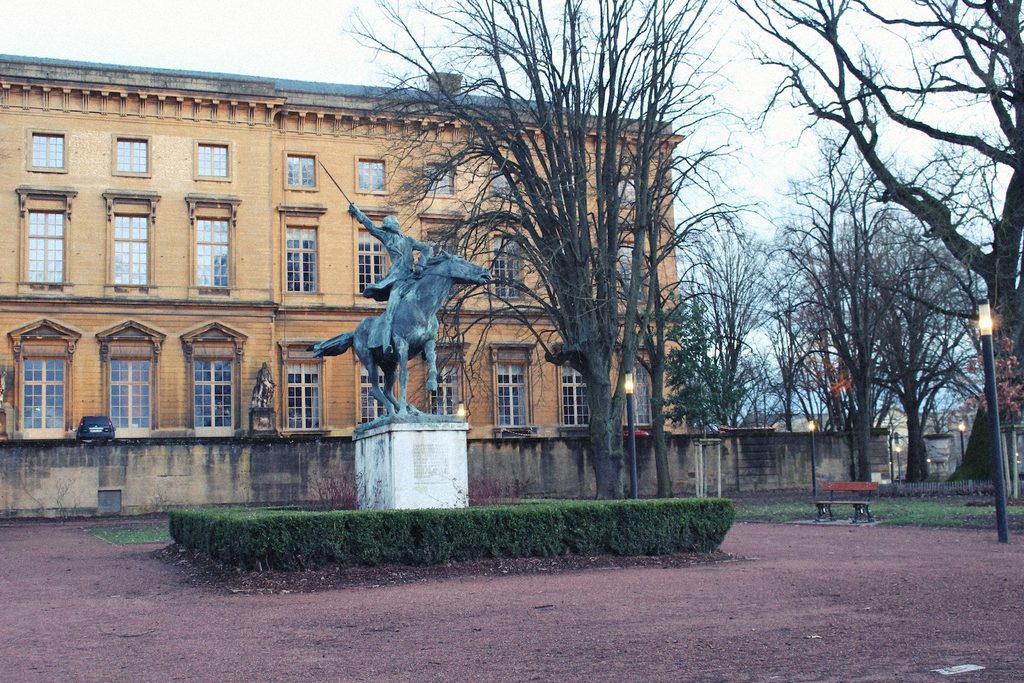
This garden is tucked between the Palais de Justice (Law Courts) and feels hidden despite being in the middle of the city centre. It offers nice views over La Moselle and the Plan d’eau de Metz (Metz Lake).
43. Palais du Gouverneur Militaire (Palace of the Military Governor)

This monumental building, constructed between 1902 and 1905, was initially intended as a second home for the German Emperor Wilhelm II. It was built in the German Neo-Renaissance style. Today, it serves as a residence for the General Military Governor commanding the northeastern military region.
44. Église Saint-Maximin (Saint Maximin Church)

This church displays Roman, Gothic and Baroque architectural styles, the fruit of many stages of construction likely stretching from the 12th to 15th century, as well as 19th-century renovations. Some of its stained glass windows were created in the 1960s by poet and playwright Jean Cocteau.
45. Église Saint-Martin (Saint Martin Church)

This church dates back to the 13th century. Most of the building is Gothic, with some traces of the Roman and Neo-Gothic styles. You can also visit the church’s beautiful little garden, a real haven of peace.
46. Église Saint-Clément (Saint Clément Church)

This church, dedicated to the saint who is said to have slain the dragon le Graoully, was completed in the 18th century. It combines Gothic architecture with a Neo-Classical façade in honey-toned Jaumont stone.
47. Église Saint-Eucaire (Saint Eucaire Church)

This church was built between the 12th and 14th centuries, but its foundations date back to the fifth century. Its 12th-century bell is the oldest in Metz. Also look out for the Flamboyant Gothic front entrance, which dates back to 1474.
48. Église Saint-Simon-et-Saint-Jude (Saint Simon and Saint Jude Church)

While I wouldn’t make the trip just to see this church alone, it’s a good reference point if you wish to visit Île du Fort-Moselle (Fort Moselle Island), which is a nice, low-density area offering scenic views of the river. The church itself was built in the 18th century to serve nearby military barracks.
49. Église Sainte-Thérèse-de-l’Enfant-Jésus (Church of Saint Thérèse of the Infant Jesus)

This church was built between 1937 and 1954, and its rather jarring modern architectural style makes it an imposing sight, with its concrete monolith of a building and its pointy, 70 m spire.
50. Tour du Temple de la Garnison de Metz (Tower of the Temple of the Garrison of Metz)

In the late 19th century, when Metz was under German rule, a massive Lutheran church that mainly served German soldiers was built, which gives an idea of the extent of German military presence in the city. Today, only the Neo-Gothic tower still stands.
51. Fort de Bellecroix (Bellecroix Fort)

This huge park to the east of the city centre is not just a green space but also a historical site. There are numerous cycling and walking paths that take you past 13th- and 14th-century ramparts. The park is also home to fortifications that protected the city in the 18th and 19th centuries.
52. Fort Queuleu (Queuleu Fort)

Fort Queuleu (Queuleu Fort) is a vestige from the defensive fortifications built between 1868 and 1870, just before the first annexation of Metz to the German Empire. The fort was also used as an internment camp during World War II.
53. Boulevard Paixhans (Paixhans Boulevard)

Boulevard Paixhans (Paixhans Boulevard), together with Avenue Foch (Foch Avenue), was built on the site of the ancient Gallo-Roman city walls, which were destroyed under German annexation to extend the city. Check out the École Chanteclair-Debussy (Chanteclair-Debussy School) at 29 Boulevard Paixhans (pictured), built in the Neo-Renaissance style and designed by a German architect.
54. Canal de la Moselle (Canal of the Moselle)

This canal was built in the 20th century to facilitate access to Metz’s port. It is one of the nicest places in the city for a walk in nature. Take the pathway that runs alongside Rue du Canal, and then continue following the canal for as long as you want.
55. Square du Luxembourg (Luxembourg Square)

This square is located at the base of the Tour du Temple de la Garnison de Metz (Tower of the Temple of the Garrison of Metz), and consists of a green space overlooking two branches of the Moselle. It’s a popular spot for picnics on sunny days.
56. Place Raymond Mondon (Raymond Mondon Square)

This big roundabout is surrounded by many imposing buildings constructed during the first period of German annexation, and connects to Avenue Foch (Foch Avenue). Like the latter, it was built on the site of ancient fortifications.
57. Tour Camoufle (Camoufle Tower)

One of the monuments located around Place Raymond Mondon (Raymond Mondon Square) is the Tour Camoufle (Camoufle Tower). This tower is one of the few vestiges that remain of the medieval city walls, its construction dating back to the 15th century.
58. Château d’eau (water tower)

Metz’s château d’eau (water tower), located a short distance from the famous Gare de Metz-Ville (Metz-Ville Station), was built in 1908 during the German occupation, and designed by the same architect to supply water to steam trains. It is currently not in use, but the intricate building still stands out.
59. Grenier de Chèvremont (Chèvremont Granary)

This medieval building dates back to the 15th century, and certain of its elements were constructed in an Italianate style. It was used to store the city’s grain reserves and is now part of the Musée de la Cour d’Or (Metz Museum).
60. Hôtel de Heu (Heu Hôtel)

This Gothic building was a sumptuous residence that was later turned into a seminary. It is a testament to the wealth of the Metz bourgeoisie, which reached its height in the 13th and 14th centuries.
61. Hôtel de Burtaigne (Burtaigne Hotel)

This aristocratic residence likewise dates back to the Renaissance period, during which the Metz bourgeoisie reached peak prosperity in the 13th and 14th centuries. Built in 1531, it cannot be visited, but is visible from the outside.
62. Abbaye Saint-Arnould (Saint Arnould Abbey)
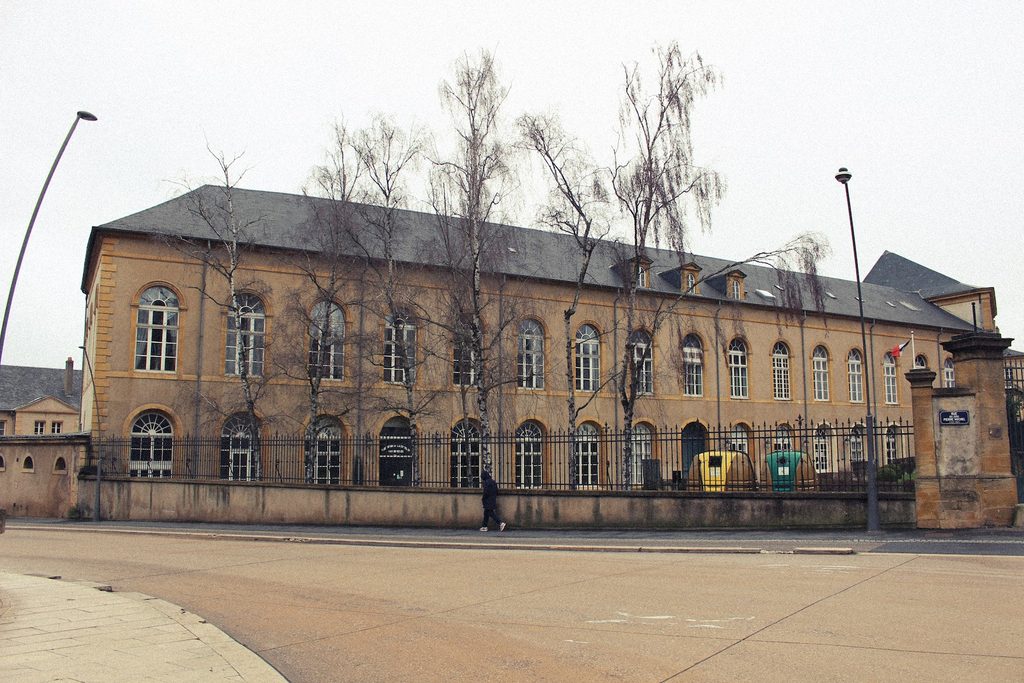
This former Benedictine abbey was founded in the ninth century, but ceased to function as such during the French Revolution, when it was used as an artillery and engineering school. It then housed a war college during the first German occupation. It is currently closed to visitors but can be viewed from the outside.
63. Maison natale de Verlaine (Birthplace of Verlaine)

This house was the birthplace of Paul Verlaine, who is known for his decadent poetry and his turbulent relationship with Arthur Rimbaud, another poet. The house in which he was born is open to visitors and maintains exhibits on his life and work. English translations are available. Check their opening hours before going.
64. Synagogue de Metz (Metz Synagogue)

Metz is home to one of the oldest Jewish communities in France. The Neo-Roman synagogue, which was built between 1848 and 1850, survived being obliterated by the Nazis during the German annexation between 1940 and 1945.
65. Muse

This modern shopping mall located next door to the Centre Pompidou-Metz offers a convenient spot to buy groceries at the Leclerc hypermarket, have a sit-down meal or do a spot of shopping.
Day trips from Metz
- Metz is only an hour and a half by train from Paris.
- Metz is a gateway to other destinations in Lorraine, including Nancy, Verdun, Vittel and Épinal.
- Other cities in the Grand Est region accessible by train from Metz include Strasbourg, Mulhouse and Colmar in Alsace, and Reims and Troyes in Champagne-Ardenne.

Comments are closed.